
University of South Australia hosts ‘Gestures of Care’ exhibition highlighting social connection for vulnerable families
How an art‑driven exhibition showcases the power of peer support
The University of South Australia’s Bob Hawke Prime Ministerial Centre is now home to Gestures of Care, an exhibition that turns hands‑on creative work into a case study of how social connection can transform lives for families in need. The display moves beyond the visual arts to explore the practical outcomes of a community‑based program called Family by Family. By bringing together children, artists, researchers and participants, the exhibition demonstrates the measurable difference that peer‑to‑peer care can make in everyday life.
What the exhibition offers
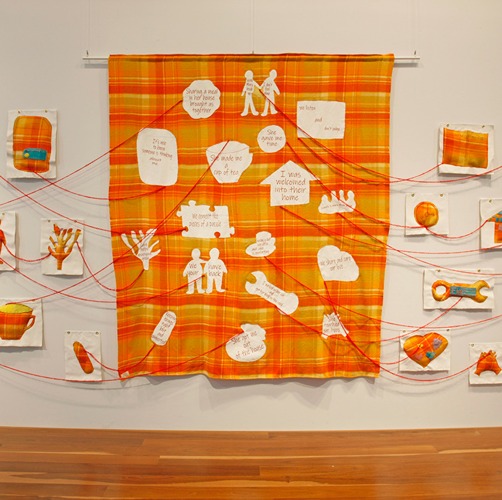
At its core, Gestures of Care displays 70 pieces of work created by people who have benefitted from Family by Family’s lived‑experience model. The pieces range from textiles—most notably a large “Care Blanket” constructed from repurposed woollen blankets—to collaborative ink paintings, child‑devised collages, an animated video and two ceramic groupworks. Each artwork carries an embedded narrative of belonging, resilience and hope. Viewers are invited to walk around a space that feels both intimate and expansive: a living record of connection in action.
Why peer support matters for families in crisis
The research underpinning the exhibition was conducted as part of the Australian Research Council (ARC) Linkage project *Situating Care*. The project was run by the University of Adelaide in partnership with the Australian Centre for Social Innovation (TACSI) and Uniting Communities. It focused on how Family by Family nurtures agency within families facing intergenerational trauma, gendered violence, homelessness, mental health challenges, lack of employment or education, and social isolation.
Professor Megan Warin from the School of Social Sciences notes that the research “demonstrates how Family by Family redefines care as a radical and transformative act.” The exhibition conveys this message in ways that are easy to interpret—through stories etched into cloth or painted onto paper—yet it also presents concrete evidence of increased confidence and empowerment among participants. For example, Katie, a single parent of four, explains how forming a friendship with fellow participant Hayley helped her move from feeling hopeless to regaining autonomy.
Connecting research, art and community action
The curatorial team—including artist Jacinta Thompson (Executive Director of The Bob Hawke Prime Ministerial Centre)—worked closely with anthropologists and the Art Bus to translate research findings into tangible art. Every piece is a dialogue, a prompt for visitors to ask questions about the social dynamics that enable trust and collective care. In addition to visual art, the exhibition houses an animation that tracks the steps a family takes from togetherness to independent thriving, offering an accessible entry point for younger audiences and those without art training.
Implications for social‑service professionals
For health and human‑services workers, the exhibition offers a practical framework for leveraging community resources. Key takeaways include:
- Peer networks build resilience. By creating sustained relationships among families, programs can disperse risk and encourage adaptive coping strategies.
- Creative expression fosters trust. Engaging clients in art or craft can break down barriers, make emotional topics feel safer, and seed a shared sense of identity.
- Research must be integrated. The success of Gestures of Care shows that data-driven design of interventions enhances credibility and stakeholder buy‑in.
These insights can inform planning sessions, grant proposals and community outreach plans. Whether you’re a nurse with a therapeutic arts program, a social worker coordinating family‑support services, or a policy adviser, the exhibition provides concrete, evidence‑based strategies that work in real communities.
How to get involved in the exhibition’s mission
There are several ways to participate and support the goals highlighted by Gestures of Care:
- Attend a public viewing. The exhibition is open daily; it also hosts guided tours during peak visiting hours.
- Invite your organization to co‑host an after‑hours engagement session, where participants can create collaborative art projects.
- Partner with Family by Family to develop similar peer‑support initiatives in your region.
- Share your success stories or challenges on social media using the hashtag
#GesturesOfCare—the Hawke Centre will feature selected posts on their page.
Next steps for professionals and families alike
For anyone attending the exhibition, consider the following actions:
- Connect with the Family by Family program through their website for a deeper dive into their methodology.
- Consult the University of Adelaide’s research publication on Investigation of Radical Care for methodological details that can be adapted in your work.
- Explore the University of South Australia’s community partnership offers if you’re looking to collaborate on future exhibitions or research.
Additional resources and community contacts
Beyond the exhibition, UniSA provides a range of resources that may complement your practice:
- Unite Communities. A not‑for‑profit partner that facilitates similar family‑support initiatives across Australia.
- The Australian Centre for Social Innovation (TACSI). Known for their research on radical care, TACSI offers training workshops for community workers.
- Local health clinics in Adelaide. Many operate counselling programs that can enroll participants in Family by Family‑style support groups.
For those interested in learning more about the exhibition, click here to dive into the full event schedule.
Call to action
If you’re a social‑service professional looking to embed community‑based care into your work, take the next step: Explore the University of South Australia’s program offerings that support community health and resilience.
Share your experiences and ideas with us in the comments below—your stories could inspire future exhibitions.
Stay connected for updates on upcoming exhibitions and community events by visiting UniSA Media Centre.