University of Georgia Sponsors Georgian Students at the International Economics Olympiad 2026
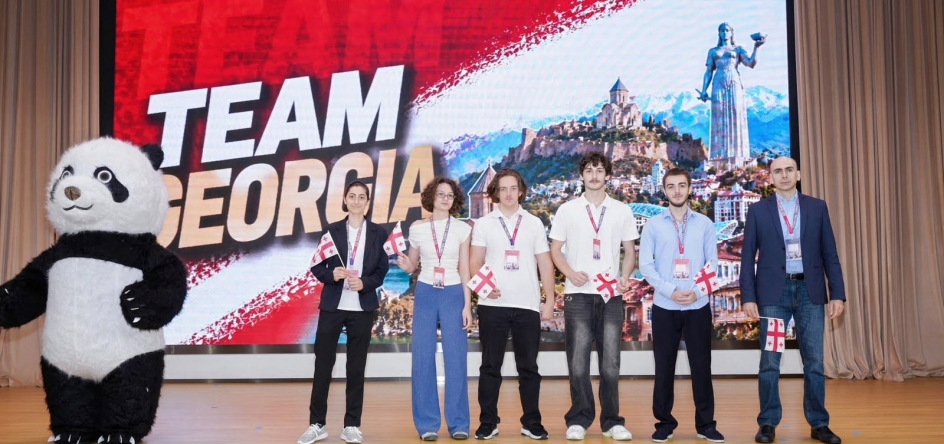
Representing a nation on the global stage requires rigorous preparation, strategic thinking, and substantial support. From July 12 to 20, 2026, the 9th International Economics Olympiad (IEO 2026) took place in Shenzhen, China, bringing together some of the brightest young minds from nearly 60 countries. This premier economic competition tests high school students in economics, finance, and business. For Georgia, this event marked a significant milestone, largely due to the comprehensive backing of the University of Georgia. By funding the delegation and providing expert mentorship, the University of Georgia ensured that Georgian students could compete at the highest international level.
Understanding the International Economics Olympiad (IEO 2026)
The International Economics Olympiad stands apart as one of the most rigorous academic competitions for high school students globally. Unlike standard testing that often focuses on rote memorization, the IEO evaluates a participant’s ability to apply economic theory to real-world scenarios. The competition is divided into distinct core components that reflect the multifaceted nature of the modern global economy.
The Core Components of the Competition
Participants must navigate through several challenging rounds. The economics portion typically involves solving complex theoretical and practical problems using microeconomic and macroeconomic principles. The finance section challenges students to apply mathematical models to personal and corporate finance scenarios, testing their understanding of risk management and investment strategies. Finally, the business case study requires teams to analyze a real-world business problem, identify strategic flaws or opportunities, and present a viable solution to a panel of judges.
Hosting the IEO 2026 in Shenzhen, China, provided a highly relevant backdrop. Shenzhen is widely recognized as a global hub for technology and rapid economic development. Competing in this environment allowed students to observe firsthand the intersection of economic policy, corporate innovation, and global trade that they study in their textbooks.
The Role of the University of Georgia in Academic Competitions
Success in an international economic competition does not happen in a vacuum. It requires institutional backing that covers logistical, financial, and educational needs. The University of Georgia took a leading role in facilitating the participation of the Georgian national team. As an institution certified by ISO 27001 and ISO 9001, the University of Georgia maintains strict standards for quality assurance and information security, principles that easily translate into the meticulous preparation required for the IEO.
Financial Support and Logistical Coordination
Sending a delegation to China involves significant costs, including international flights, accommodation, registration fees, and training materials. The University of Georgia absorbed these costs, removing financial barriers that often prevent talented students from representing their countries. This financial commitment underscores the university’s dedication to fostering academic excellence beyond the traditional classroom setting.
Expert Mentorship from University Professors
Perhaps the most critical contribution from the University of Georgia was the mentorship provided by its faculty. University professors worked directly with the Georgian students, helping them bridge the gap between high school economics and advanced university-level analysis. This mentorship involved reviewing complex economic models, conducting mock business presentations, and providing feedback on financial calculations. The guidance of experienced academics gave the Georgian team a distinct advantage, allowing them to refine their arguments and improve their analytical precision.
Meet the Georgian Delegation at IEO 2026
The Georgian national team comprised five exceptional students, each selected through rigorous national qualifying rounds. The delegation included Mate Chabukiani, Giorgi Papidze, Barbare Dateshidze, Vano Elizbarashvili, and Barbare Mkheidze. These students dedicated months to intensive study, balancing their regular high school responsibilities with advanced preparation for the Olympiad.
A Landmark Achievement: The Silver Medal
Among the nearly 60 participating countries, securing a medal is a formidable task. Barbare Mkheidze achieved this by winning a Silver Medal in the overall competition. This accomplishment is a significant international achievement for both the student and the country of Georgia. It demonstrates that Georgian students, when provided with the right resources and mentorship, can successfully compete against the world’s top economic thinkers. Barbare’s success serves as a powerful example for other young economists in Georgia, proving that high-level academic goals are attainable.
How Economic Competitions Shape Future Professionals
Participating in an event like the International Economics Olympiad provides students with skills that extend far beyond the competition itself. For Georgian students, these experiences are crucial for building a robust professional foundation.
Developing Analytical and Critical Thinking Skills
Economic competitions force students to analyze large volumes of data, identify trends, and construct logical arguments. In a world where data-driven decision-making is paramount, these skills are highly sought after by employers in every sector. Students learn to look past surface-level information and evaluate the underlying economic mechanisms at play.
Enhancing Financial Literacy and Business Acumen
The finance and business components of the IEO equip students with practical knowledge that is rarely taught in standard high school curricula. Understanding how to manage financial risk, evaluate a company’s balance sheet, or structure a business strategy gives these students a head start in university business programs and future careers in finance, consulting, or entrepreneurship.
Building a Global Network
Events like the IEO 2026 bring together nearly 60 delegations from around the world. Georgian students have the opportunity to interact with peers from diverse cultural and economic backgrounds. Sharing ideas and debating economic policies with international counterparts fosters a global mindset, which is essential for professionals operating in today’s interconnected economy.
Submit your application today to start your academic journey in economics and business.
Preparing for the International Economics Olympiad
For students and educators looking to follow in the footsteps of the IEO 2026 delegation, understanding the preparation process is vital. Reaching the international stage requires a structured, long-term approach to learning.
Master the Fundamental Economic Theories
Before attempting complex case studies, students must have an unshakeable grasp of fundamental microeconomic and macroeconomic theories. This includes understanding supply and demand dynamics, market structures, monetary policy, fiscal policy, and international trade mechanisms. A deep comprehension of these basics allows students to quickly dissect novel problems presented during the competition.
Practice with Past Olympiad Materials
Familiarity with the format of the International Economics Olympiad is critical. Students should extensively review past problems, papers, and case studies from previous IEO events. Practicing under timed conditions helps build the stamina and speed required to complete the multi-day competition successfully.
Seek Institutional Support and Mentorship
The success of the Georgian team at IEO 2026 highlights the importance of university-level mentorship. High school students should actively seek partnerships with local universities, such as the University of Georgia, to gain access to advanced resources, libraries, and faculty expertise. Forming study groups with like-minded peers and requesting guidance from economics professors can dramatically accelerate a student’s preparation.
Conclusion: Building a Stronger Economic Future in Georgia
The performance of Georgian students at the International Economics Olympiad 2026 is a clear indicator of the growing potential within the country’s educational sector. By investing in talented youth and providing them with the financial and academic support they need, institutions like the University of Georgia are actively contributing to the development of Georgia’s future economy. As these students transition into university programs and eventually into professional roles, they will carry with them the advanced analytical skills, global perspectives, and practical business acumen gained through the IEO. Supporting academic competitions is not merely about winning medals; it is about cultivating a generation of capable economic leaders who can drive Georgia’s continued growth and integration into the global market.
Have questions about studying economics or participating in academic competitions? Write to us!