Navigate Your RIT Croatia Study Abroad Experience and Business Minor in Zagreb
Choosing to study in a foreign country is a significant decision that shapes both your academic trajectory and your personal development. For many students, the concept of studying abroad is appealing, yet the practical realities of living in a new city can seem daunting. Sébastien Guillotin, a third-year New Media Interactive Development student, faced these exact realities when he decided to spend a summer at RIT Croatia. What started as a strategic move to complete a minor in Business Administration quickly evolved into a comprehensive lesson in independence, cultural adaptation, and resilience. His time in Zagreb provides a practical, ground-level view of what it actually means to be an international student in Croatia. If you are considering a similar path, understanding the day-to-day challenges and triumphs of student experiences in Zagreb can help you prepare effectively. Submit your application today to begin mapping out your own academic journey in Southeast Europe.
Why Zagreb Stands Out as a Premier Study Abroad Destination
When students think of Europe, they often gravitate toward Western European capitals. However, choosing to study abroad in Zagreb offers a distinctly different and highly rewarding experience. As the capital of Croatia, Zagreb blends Austro-Hungarian architecture with a modern, youthful energy driven by its large student population. For Sébastien, the draw was specifically the chance to spend an extended period at RIT Croatia, pairing his technical major with business coursework to build a stronger skillset for the workforce and co-op market. This strategic academic alignment is a core benefit of studying at an international campus that shares the curriculum and standards of its main institution. You are not taking a semester off; you are actively advancing your degree while immersing yourself in a new culture. Zagreb is highly walkable, safe, and centrally located, making it an ideal base for exploring the rest of Croatia and neighboring countries, which adds immense value to your time outside the classroom.
Understanding the Local Rhythm
Adapting to a new city requires more than just learning where your classes are; it requires understanding the local rhythm. In Zagreb, this means adjusting to a lifestyle that might differ significantly from what you are used to. For instance, the realization that many grocery stores and smaller shops close on Sundays is a classic example of the minor cultural shifts international students must navigate. Rather than viewing these differences as inconveniences, successful students learn to plan their weeks accordingly. This adaptation process is a fundamental component of studying abroad. It teaches you to anticipate, plan, and remain flexible—skills that are directly transferable to any future career. By embracing the local pace of life, you transition from being a temporary visitor to a functioning resident of the city.
Academic Rigor and Classroom Culture at RIT Croatia
A common concern for students considering a semester abroad is whether the academic quality will match their home institution. At RIT Croatia, students receive the same rigorous education found on the main campus, but with the added benefit of smaller class sizes and distinct cultural perspectives. Sébastien found his finance class to be particularly engaging, noting that the challenge it presented was exciting rather than overwhelming. When you step outside your primary discipline—as he did by diving into business administration—you force your brain to operate in new ways, which enhances your overall cognitive flexibility and problem-solving abilities. Schedule a free consultation to learn more about how RIT Croatia aligns its coursework with your degree requirements.
The Value of Cross-Disciplinary Studies
Taking courses outside your major while studying abroad is an excellent strategy for professional development. The modern workforce increasingly demands professionals who can bridge the gap between technical execution and business strategy. By completing his minor in Zagreb, Sébastien maximized the return on his study abroad investment. Furthermore, he noticed a distinct aspect of Croatian student culture: the generosity of professors, particularly regarding consistent breaks during lectures. This classroom dynamic reflects a broader European approach to education that values sustained attention and student well-being over marathon lectures. Experiencing different pedagogical styles broadens your perspective on how learning can be structured, making you a more adaptable student and professional.
Practical Tips for Living in Croatia as an International Student
The most profound learning often happens outside the lecture hall. Sébastien noted that the “world of difference” he experienced was largely driven by the additional challenges of managing daily life in a foreign country. Figuring out how to navigate Croatian grocery stores, reading labels in a different language, and establishing a new daily routine require active problem-solving. These are not grand, cinematic challenges, but rather a series of small, cumulative tasks that demand patience and resourcefulness. Building this level of independence is incredibly empowering. Knowing that you successfully set up your life, managed a budget in a different currency, and handled logistics in a foreign country provides a deep sense of confidence that will stay with you long after you return home.
Mastering the Basics of Daily Independence
To make the most of your time in Croatia, approach daily tasks with a positive mindset. Instead of stressing over finding specific items at the local market, treat it as an opportunity to discover new local brands and foods. Learn a few basic phrases in Croatian; even a simple “hvala” (thank you) or “molim” (please) goes a long way in building rapport with locals. Plan your weekends around Sunday closures, and use that day to explore parks, visit museums, or take a tram ride to Maksimir Park. By mastering these basic elements of daily independence, you reduce stress and free up mental energy to focus on your studies and social life.
Building Lasting Student Experiences Beyond the Campus
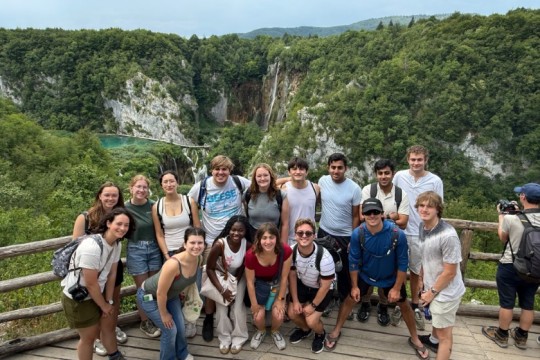
A study abroad program is only as good as the memories you create outside the classroom. Sébastien made a conscious effort to say yes to new experiences, and this is perhaps the most critical advice for any international student. During his time in Zagreb, he engaged in a variety of activities, from trying unfamiliar local cuisine to more adventurous pursuits like parasailing. Renting a car with friends to explore the Croatian countryside allowed him to see parts of the country that typical tourists might miss, such as the stunning Plitvice Lakes. These are the student experiences that define a summer abroad. They foster deep bonds with your peers and give you a profound appreciation for the natural beauty and geographic diversity of Croatia. Explore our related articles for further reading on the best weekend trips and activities for students in Croatia.
Saying Yes to Spontaneous Adventures
The inclination when arriving in a new country is often to stick to what is familiar. However, the students who gain the most from their time abroad are those who push past their comfort zones. Whether it is attending a local festival, joining a student club like the International/Culture Club at RIT Croatia, or simply spending an afternoon with your landlord’s cats instead of staying in your room, these small moments accumulate into a rich, fulfilling experience. Zagreb is surrounded by mountains and close to the Adriatic coast, making it incredibly easy to plan weekend getaways. Embrace the spontaneity that comes with living in a new place, and allow yourself to be surprised by what you find.
Prepare for Your Own Study Abroad Adventure
Studying abroad is undeniably hard in ways that might surprise you. As Sébastien accurately points out, even the little things can build up and create moments of friction. However, it is precisely the act of overcoming these minor obstacles that makes the experience so valuable. You emerge from the program stronger, more independent, and better equipped to handle the ambiguities of the real world. Choosing to study abroad, particularly in a dynamic and welcoming city like Zagreb, is an investment in your future self. You only get to be a student once, and integrating an international study experience into your degree is one of the most strategic and enjoyable choices you can make. Have questions? Write to us! to connect with an admissions advisor who can help you plan your transition to RIT Croatia.
The transition from a foreign place to a temporary home does not happen overnight. It requires effort, curiosity, and a willingness to engage with the unfamiliar. By focusing on both your academic goals and your personal growth, you can ensure that your time in Croatia is productive, memorable, and professionally advantageous. Take the next step in your academic career, and start planning your study abroad experience today. Share your experiences in the comments below if you have previously studied or traveled in Croatia!