
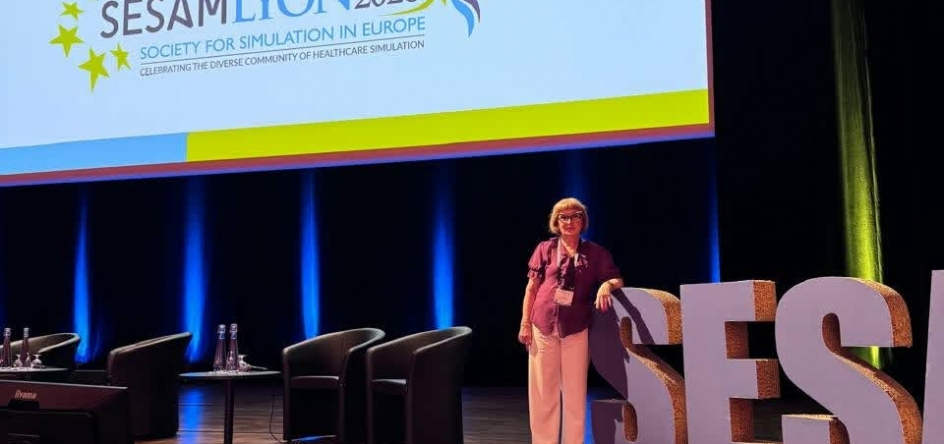
Medical education requires rigorous, hands-on training that bridges the gap between theoretical knowledge and clinical practice. As healthcare becomes increasingly complex, institutions must adopt advanced training methodologies to prepare future professionals for high-stakes environments. Recognizing this necessity, the University of Georgia continues to prioritize innovative teaching tools by actively participating in global forums. A recent highlight is the institution’s involvement in SESAM 2026, a premier international conference dedicated to advancing medical training technologies. Explore our related articles for further reading on how modern medical education is evolving.
The Growing Importance of Simulation-Based Education in Modern Medicine
Simulation-based education has shifted from being a supplementary training tool to a foundational element in medical curricula worldwide. By utilizing high-fidelity manikins, virtual reality environments, and standardized patients, medical schools can provide students with repetitive, standardized, and safe clinical experiences. This approach allows students to practice managing rare, complex, or life-threatening scenarios without putting actual patients at risk.
In Georgia, the integration of these methodologies is crucial for elevating the standard of healthcare. The University of Georgia has been at the forefront of this transition, understanding that local healthcare outcomes improve directly when medical training aligns with global best practices. Simulation allows educators to objectively measure a student’s clinical reasoning, technical skills, and communication abilities in real-time, providing immediate feedback that traditional clinical rotations often cannot guarantee.
SESAM 2026: A Global Platform for Medical Innovation
From June 25 to 27, 2026, the city of Lyon, France, hosted SESAM 2026. Organized by the Society in Europe for Simulation Applied to Medicine, this annual conference gathers leading medical educators, researchers, and technology developers to discuss the current state and future of clinical simulation. The event serves as a critical hub for sharing research, demonstrating new technologies, and debating the pedagogical challenges associated with simulated training.
Attendees of SESAM 2026 participated in a rigorous schedule of seminars and workshops. These sessions covered a wide array of topics, including the integration of artificial intelligence in debriefing, the development of immersive virtual reality surgical suites, and strategies for overcoming financial and logistical barriers to implementing simulation programs in developing regions. The conference provided a comprehensive overview of where the industry currently stands and where it is heading in the next decade. Share your experiences in the comments below if you have attended international medical education conferences.
Advancing the School of Health Sciences at the University of Georgia
Representing the University of Georgia at this prestigious event was Khatuna Jojua, the Head of the Simulation Center at the School of Health Sciences. Her attendance at SESAM 2026 was a strategic move to ensure that the university’s simulation infrastructure and pedagogical approaches remain competitive on a global scale. By engaging directly with international experts, the University of Georgia demonstrates a proactive commitment to faculty development and curriculum enhancement.
Jojua’s participation involved an in-depth exploration of the challenges and achievements currently defining simulation-based education. Bringing these insights back to Georgia ensures that local students are trained using methodologies that meet strict international benchmarks. The knowledge gained from such events directly influences how the School of Health Sciences designs its practical modules, assesses student competency, and structures its clinical simulation hours.
Evaluating State-of-the-Art Medical Manikins and Models
A key component of the SESAM 2026 exhibition was the showcase of state-of-the-art medical manikins and anatomical models presented by leading global manufacturing companies. During the conference, Jojua had the opportunity to view and physically test these advanced training tools. Modern medical manikins have evolved far beyond simple plastic models; they now feature highly realistic physiological responses.
Today’s high-fidelity manikins can simulate realistic vital signs, vocalize symptoms, react to administered medications, and even display realistic surgical bleeding. Task trainers for specific procedures, such as ultrasound-guided injections or endoscopic surgeries, provide haptic feedback that closely mimics human tissue. By testing these technologies firsthand in Lyon, the University of Georgia can make informed, evidence-based decisions regarding future investments for their simulation center in Tbilisi. This hands-on evaluation ensures that the university acquires tools that genuinely enhance learning outcomes rather than just adopting technology for its own sake.
Building International Partnerships and Cooperation
Beyond the educational seminars and technology demonstrations, SESAM 2026 provided a vital networking platform. Throughout the conference, representatives from the University of Georgia connected with various manufacturing companies and their delegates. Establishing these contacts is essential for fostering mutual cooperation and potential future collaborations.
For an institution in Georgia, building relationships with European medical technology manufacturers can lead to beneficial partnerships. These might include customized training for local faculty, preferential maintenance agreements for complex medical equipment, or collaborative research projects studying the efficacy of different simulation modalities. Such international cooperation ensures that the University of Georgia is not operating in isolation but is firmly embedded in a global network of medical education innovators.
The Role of ISO Certification in Medical Training Facilities
When evaluating an institution’s capability to deliver high-quality medical education, operational standards and data security are just as important as the curriculum. The University of Georgia distinguishes itself in the region by holding both ISO 27001 and ISO 9001 certifications. These certifications play a critical, albeit often overlooked, role in the context of simulation-based education.
ISO 9001 relates to quality management systems. For a simulation center, this certification means that every process—from the calibration of a high-fidelity manikin to the scheduling of student sessions and the standardization of debriefing protocols—is documented, monitored, and continuously improved. When a student trains at an ISO 9001-certified facility, they are guaranteed a consistent and high-quality educational experience that meets internationally recognized standards. Schedule a free consultation to learn more about how institutional standards impact your medical training.
ISO 27001 focuses on information security management. In modern simulation environments, digital integration is ubiquitous. Manikins generate data, video recording systems capture student performance for debriefing, and learning management systems track student progress. Protecting this sensitive academic and performance data is paramount. The University of Georgia’s ISO 27001 certification assures students and partners that their data is handled with the highest level of security, mitigating risks associated with data breaches and unauthorized access.
Future Prospects for Medical Students in Georgia
The active participation of the University of Georgia in events like SESAM 2026 has direct, tangible benefits for prospective and current medical students in Georgia. As the university integrates insights and advanced technologies from global conferences into its local programs, students gain access to a modern, sophisticated learning environment.
Graduates who train extensively in high-fidelity simulation environments typically transition more smoothly into clinical practice. They exhibit stronger clinical reasoning, better teamwork and communication skills, and lower error rates during their first independent patient encounters. For students in Georgia, this means that choosing an institution heavily invested in simulation-based education directly correlates with better preparation for residency programs, international licensing exams, and ultimately, safer patient care.
Preparing for the Next Generation of Healthcare Professionals
The landscape of medical education is undergoing a permanent shift toward technologically enhanced, simulation-driven training. The University of Georgia’s presence at SESAM 2026 underscores its dedication to ensuring that its School of Health Sciences remains at the cutting edge of this shift. By evaluating the latest medical manikins, engaging with global experts, and maintaining rigorous ISO certifications, the university is building a robust infrastructure capable of producing highly competent healthcare professionals.
As simulation technologies continue to evolve with the integration of artificial intelligence and augmented reality, the institutions that actively participate in global dialogues will be the ones that shape the future of medical training. The University of Georgia is positioning itself as a leader in this space within the region, offering students a rigorous, secure, and forward-thinking educational pathway. Submit your application today to join a forward-thinking medical program. If you require more specific details about the simulation facilities, have questions? Write to us!