Examine Policy and Society Through Gnomon Wise at the University of Georgia
Building a Foundation for Research Dialogue at the University of Georgia
Academic institutions serve a critical function beyond classroom instruction; they act as vital hubs for analyzing complex societal issues and fostering informed public discourse. At the University of Georgia, this responsibility is taken seriously through structured, research-driven initiatives. One of the most prominent examples of this commitment is the Gnomon Wise program, an independent research institute operating within the university’s academic ecosystem. By prioritizing evidence-based analysis, this institute provides a necessary platform for scholars, policymakers, and students to engage with the pressing challenges facing the region today.
The importance of establishing a formalized space for research dialogue at the University of Georgia cannot be overstated. In an era characterized by rapid legislative changes, economic fluctuations, and shifting geopolitical alliances, the need for clear, objective, and methodologically sound analysis is paramount. Gnomon Wise addresses this need by grounding its public events in comprehensive analytical publications, ensuring that every discussion is backed by rigorous data and thorough peer review. This approach elevates the standard of public debates, moving conversations away from mere opinion and toward substantive academic inquiry.
For prospective students, current academics, and policy professionals, understanding how an institution facilitates this level of dialogue is a key indicator of its academic health. Engaging with these initiatives allows individuals to connect theoretical knowledge with real-world applications. Schedule a free consultation to learn more about how the University of Georgia integrates research initiatives into its broader academic programs.
Exploring Critical Themes in Recent Georgia Seminars
During the spring of 2026, the Gnomon Wise institute hosted a rigorous series of weekly Georgia seminars. These sessions are designed to dissect multifaceted issues, ranging from domestic legal frameworks to international geopolitical shifts. The selection of topics reflects a strategic focus on the most urgent policy matters affecting the country and the wider Caucasus region. By examining these themes through an academic lens, participants are able to separate political rhetoric from empirical reality.
Analyzing Legislative Changes and Constitutional Standards
A significant portion of the recent seminar schedule was dedicated to evaluating the cumulative impact of legislative amendments adopted during 2025 and 2026. In many democratic systems, the rapid introduction of new laws can have unintended consequences that conflict with existing constitutional frameworks. Researchers at Gnomon Wise systematically tracked these amendments, assessing their compatibility with foundational constitutional standards. Furthermore, the institute provided detailed analysis on the transformation of the constitutional model of the High Council of Justice. Understanding these legal shifts is essential for legal professionals and civic leaders who must navigate and implement these changes. The seminars provided a rare opportunity to see the legislative process critiqued in real-time by legal scholars.
Macroeconomic Trends and Regional Economic Dynamics
Economic stability remains a central concern for the South Caucasus. The seminars extensively covered macroeconomic trends and economic development dynamics specific to the region. Discussions highlighted the intricate balance required to foster growth in a geopolitically sensitive area. A particularly focused segment addressed price instability in Georgia, explicitly examining the role of monetary policy in mitigating inflationary pressures. By bringing together economic theorists and practitioners, the University of Georgia facilitates a nuanced understanding of how national banks and governmental fiscal policies directly impact everyday market prices and long-term economic viability.
Artificial Intelligence in Qualitative Research
Recognizing the global shift brought about by technological advancement, Gnomon Wise also dedicated resources to understanding the application of artificial intelligence in academic methodologies. Specifically, the seminars investigated how AI tools are being integrated into qualitative research. Unlike quantitative data analysis, qualitative research relies heavily on human interpretation of text, interviews, and cultural context. The integration of AI into this space raises profound ethical challenges, including questions about bias, data privacy, and the preservation of human nuance in social science research. Discussing these challenges openly prepares the next generation of researchers to utilize new technologies responsibly.
The Foreign Influence Registration Act: A Case Study in Public Discussions Georgia
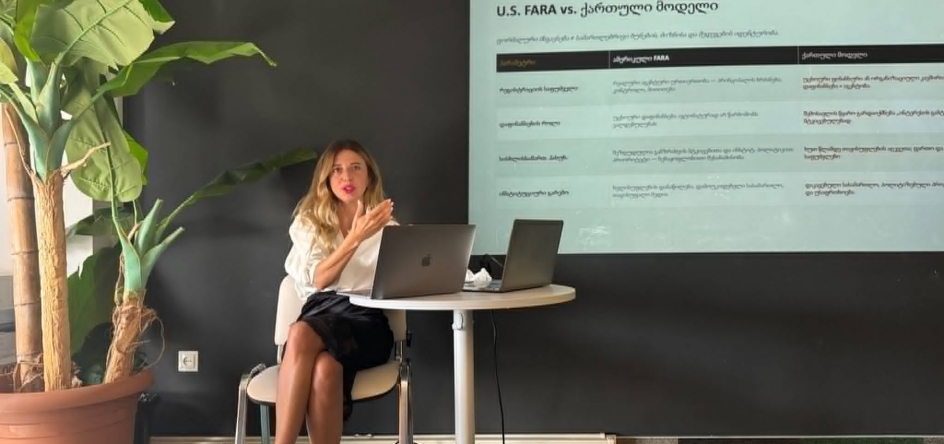
Among the most critical topics addressed in the recent series was the Foreign Influence Registration Act. This piece of legislation has generated significant domestic and international attention, making it a prime subject for rigorous academic scrutiny. Rather than focusing solely on the political rhetoric surrounding the law, the public discussions Georgia hosted by Gnomon Wise aimed to dissect its political context and potential long-term implications for civil society, media, and non-governmental organizations.
The institute’s approach to this controversial topic demonstrates the value of academic independence. By grounding the debate in legal analysis, comparative international law, and empirical research, the seminars provided a sobering counter-narrative to the often-polarized mainstream discussions. The findings derived from these sessions were subsequently refined and published in an international academic publication, extending the reach of this research dialogue University of Georgia scholars produce beyond the immediate local audience. This process—taking a highly debated public issue, analyzing it academically, and feeding the results back into both local discourse and international literature—exemplifies the core mission of the institute.
Engaging with complex legal and political topics requires a strong academic foundation. Explore our related articles for further reading on how legal studies at the University of Georgia prepare students to analyze complex legislation.
Geopolitics and Regional Security Dynamics
The research agenda at Gnomon Wise extends well beyond domestic borders, recognizing that Georgia’s internal stability is inextricably linked to regional geopolitics. A notable focus of the recent seminars was Armenia’s ongoing process of rapprochement with the European Union. Researchers analyzed how Armenia is attempting a complex geopolitical balancing act between Western institutions and historical ties to Russia. For Georgian policymakers and scholars, understanding the strategic calculations of neighboring states is vital for national security planning and diplomatic positioning.
These discussions provide students and attendees with a high-level view of international relations theory applied to immediate regional realities. By examining the economic, political, and security dimensions of Armenia’s diplomatic shifts, participants gain a clearer picture of the evolving South Caucasus landscape. This regional perspective ensures that the academic discourse remains relevant to the broader strategic challenges facing the country.
The Value of Consistent Academic Engagement
The structure of Gnomon Wise as a series of weekly seminars is a deliberate choice designed to build momentum and foster a sustained community of inquiry. One-off conferences can be informative, but weekly engagement allows for the iterative deepening of knowledge. When complex topics like monetary policy or constitutional law are discussed consistently over several weeks, participants can track the evolution of an issue, ask follow-up questions, and observe how new data alters previous conclusions.
This consistent engagement is a major benefit for students at the University of Georgia. It provides them with regular exposure to active researchers and policy analysts, bridging the gap between undergraduate or graduate studies and professional academic practice. The habit of attending weekly research seminars instills a professional discipline that is highly valued in think tanks, government agencies, and international organizations. Submit your application today to join an academic community that prioritizes active, ongoing research engagement.
Strengthening Democratic Discourse Through Objective Analysis
Ultimately, the core mission of Gnomon Wise is to strengthen academic dialogue and promote research-based discussion within Georgia. In a democratic society, the quality of public discourse directly impacts the quality of governance. When independent research institutes provide objective, well-sourced analyses of legislative changes, economic policies, and geopolitical shifts, they empower citizens, journalists, and policymakers to make more informed decisions.
The commitment of the University of Georgia to support and host such an institute highlights its dedication to societal development. By refusing to shy away from complex or controversial topics—such as the Foreign Influence Registration Act or the transformation of the justice system—the university reinforces its role as a critical anchor institution in the country. The continuation of these weekly seminars ensures that the research dialogue University of Georgia facilitates will remain a steady, reliable resource for those seeking to understand the forces shaping the nation’s future.
Academic progress relies on the active participation of curious minds. Share your experiences in the comments below regarding the importance of independent research institutes in shaping public policy and societal development.