
University of Georgia Advances Georgia Education with Quantum Technologies Week for High School Students
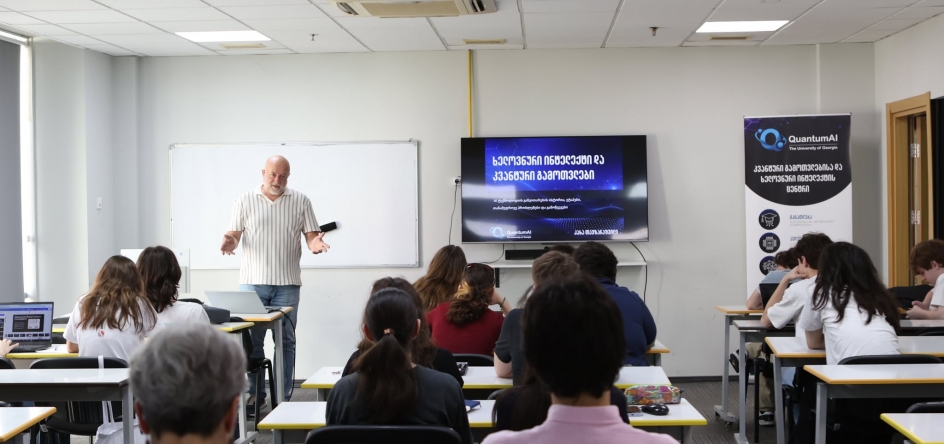
Introducing advanced scientific concepts to younger generations is a critical step in building a robust technology sector. From July 13 to 17, the University of Georgia took a definitive step in this direction by hosting Quantum Technologies Week. Designed specifically for pre-registered 9-12th graders, this intensive program provided both theoretical foundations and practical training in quantum computing. By targeting Georgia high school students, the University of Georgia is actively working to ensure the next generation of scientists and engineers is prepared for the rapid shifts occurring in the global technology landscape.
Examine the Impact of Quantum Computing on Georgia High School Students
Traditional high school curricula often lag behind the cutting edge of scientific research. Subjects like quantum mechanics and quantum computing are typically reserved for upper-level university courses. However, as these technologies move from theoretical physics into practical applications, the need for early exposure becomes paramount. Quantum Technologies Week directly addresses this gap within Georgia education by translating complex quantum principles into accessible modules for teenagers.
For Georgia high school students, participating in this program offers a distinct advantage. It allows them to grasp the fundamental differences between classical computing, which relies on bits representing zeros or ones, and quantum computing, which utilizes qubits capable of existing in multiple states simultaneously. This early comprehension demystifies a subject that often intimidates even seasoned professionals. By normalizing these concepts at the high school level, the University of Georgia is fostering a local talent pipeline that can easily transition into rigorous university STEM programs.
Schedule a free consultation to learn more about how early exposure to advanced technologies shapes academic trajectories.
Review the Academic Structure and Expert Instruction
The strength of Quantum Technologies Week lay in its diverse instructional team, which blended local academic rigor with international industry experience. The theoretical components of the week were delivered by a panel of highly qualified professionals. University of Georgia professors Kakhaber Tavzarashvili, Irakli Noselidze, and Nana Dikhaminjia provided the academic backbone of the program. Their lectures ensured that students received accurate, university-level instruction tailored for a younger audience.
Analyze the Lectures on Quantum Algorithms and Communication
The curriculum went beyond basic definitions to explore specific, high-impact areas of the field. Students attended detailed sessions on quantum algorithms, learning how these computational sequences differ fundamentally from classical algorithms in their ability to solve complex logistical, cryptographic, and chemical problems. Furthermore, lectures on quantum communication introduced students to the concept of secure data transmission using the principles of quantum mechanics, a critical area of study as global cybersecurity threats continue to evolve.
Bridging the gap between academia and industry, Mikheil Tsiklauri, Tech Lead at Apple, also contributed to the lecture series. His involvement provided Georgia high school students with a clear perspective on how quantum technologies and artificial intelligence are actively being integrated into the world’s leading tech companies. This combination of theoretical physics, academic research, and corporate application gave students a comprehensive view of the professional opportunities available in this field.
Apply Theoretical Concepts Using IBM Qiskit
A lecture-only approach is insufficient for truly understanding quantum computing. Recognizing this, the organizers of Quantum Technologies Week integrated a robust practical component. Students were not just passive recipients of information; they were actively writing code. The practical workshops centered on IBM Qiskit, an open-source software development kit (SDK) for working with quantum computers at the level of pulses, circuits, and algorithms.
Understand the Value of Peer-Led Technical Workshops
In an interesting and highly effective structural choice, the hands-on Qiskit workshops were led by peers who are only slightly older than the attendees. Giorgi Tsiklauri, a student at UC Davis, and Alexandre Tsiklauri, a student at Mountain View High School, guided the participants through the software environment. Peer-led instruction often reduces the intimidation factor associated with complex programming tasks. When students see near-peers successfully navigating IBM Qiskit, it reinforces the attainability of the material.
During these sessions, participants designed and tested simple quantum algorithms. They manipulated quantum gates, observed quantum states, and ran their code on quantum simulators. This hands-on experience is crucial for cementing theoretical knowledge. By translating abstract mathematical concepts into executable code, Georgia high school students gained a realistic understanding of what a career in quantum programming actually entails.
Explore our related articles for further reading on the importance of practical coding skills in modern education.
Evaluate the University of Georgia’s Commitment to Emerging Technologies
Quantum Technologies Week was not an isolated event but rather a reflection of a broader institutional strategy. The program was organized by the Center for Quantum Technologies and Artificial Intelligence at the University of Georgia, in strategic partnership with the Quantum Computing Association. The existence of a dedicated center for these specific technologies highlights the university’s commitment to remaining at the forefront of scientific innovation.
By investing in a center that focuses specifically on quantum computing and AI, the University of Georgia is positioning itself as a hub for advanced tech research in the region. Hosting events for 9-12th graders is a natural extension of this center’s mission. It serves as a community outreach tool that identifies promising local talent early and channels that talent toward the university’s own degree programs. This symbiotic relationship strengthens both the local Georgia education system and the university’s research capabilities.
Move Beyond Superficial Tech Knowledge in Georgia Education
One of the most significant takeaways from the event came from Professor Kakhaber Tavzarashvili, who serves as the Director of the Center for Quantum Computing and Artificial Intelligence. He emphasized a critical distinction in modern tech education: the difference between a superficial impression of a technology and a deep, functional understanding of it.
Currently, terms like “artificial intelligence” and “quantum computing” are heavily featured in media and casual conversation. However, widespread familiarity with the vocabulary does not equate to technical literacy. Professor Tavzarashvili noted that quantum computing and AI are already part of everyday life, meaning that the general public interacts with these technologies constantly without understanding their underlying mechanisms. The University of Georgia’s initiative is designed to combat this superficiality. By forcing students to engage with the actual mathematics, physics, and programming behind the buzzwords, the program ensures that participants develop genuine expertise rather than just conversational knowledge.
Have questions? Write to us! to discuss the difference between theoretical tech knowledge and practical application.
Assess Long-Term Career Benefits for Program Participants
For the Georgia high school students who attended, the long-term benefits of Quantum Technologies Week extend far beyond a single week of summer activities. First, the program provides a significant advantage in university admissions. Demonstrating a foundational understanding of quantum algorithms and practical experience with IBM Qiskit sets a student’s application apart from peers who have only completed standard high school physics and computer science courses.
Second, the program helps students make informed decisions about their future majors and careers. Quantum technology is a highly specialized field. Many students may express an interest in “tech” without knowing whether they prefer hardware engineering, software development, or theoretical physics. By exposing them to the distinct nuances of quantum communication versus quantum programming, the University of Georgia helps these students identify their specific interests early, saving time and resources during their university years.
Finally, the networking opportunities provided by the event are invaluable. Interacting directly with university professors, an Apple Tech Lead, and high-achieving university students builds professional relationships that can lead to mentorships, research assistant positions, and internships in the future. In the competitive tech industry, these early connections often prove to be as important as the technical knowledge itself.
Take the Next Steps in Your Technology Education
The University of Georgia has set a strong precedent with Quantum Technologies Week, proving that high school students are fully capable of engaging with advanced scientific concepts when provided with the right instruction and hands-on opportunities. As quantum computing and artificial intelligence continue to reshape global industries, the demand for professionals who possess a deep, practical understanding of these fields will only increase.
For Georgia high school students passionate about technology, seeking out these types of intensive, practical learning experiences is essential. Relying solely on standard high school curricula is no longer sufficient to stay competitive. Look for university-led workshops, online coding bootcamps, and open-source projects like IBM Qiskit that allow you to build a portfolio of real-world skills. The transition from classical computing to quantum computing represents a massive shift in how we solve problems, and the students who begin preparing for that shift today will be the ones leading the technological advancements of tomorrow.
Submit your application today to join upcoming technology programs and secure your place in the future of computing.