RIT University Rankings Highlight Croatian Education as Saunders College of Business Climbs to No. 58
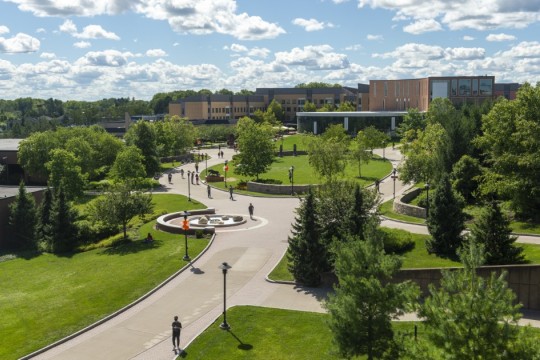
When Rochester Institute of Technology (RIT) secured a place among the top 100 national universities in the United States, the significance reached far beyond the campus in Rochester, New York. The latest U.S. News & World Report rankings placed RIT at No. 95 among national universities, while Saunders College of Business climbed 19 positions in a single year to reach No. 58 nationally. For current and future students of RIT Croatia in Zagreb and Dubrovnik, the announcement confirms a practical reality: a degree earned through RIT’s Croatian campuses carries the academic weight of a top-ranked American institution.
This article examines what the latest RIT university rankings actually measure, why they matter for anyone weighing Croatian education options with an international dimension, and how prospective students can use this information to make a well-informed choice about their studies.
A Closer Look at the Latest RIT University Rankings
Annual rankings from U.S. News & World Report are among the most widely cited benchmarks of American higher education. In the most recent edition, RIT earned the No. 95 position among national universities in the United States, a category that includes several hundred institutions across the country. Beyond the overall placement, RIT received strong recognition in three specific areas: innovation, value, and its nationally renowned cooperative education and internship programs.
The results were equally notable for Saunders College of Business. Moving up 19 places in one year is a substantial leap in a competitive field, and reaching No. 58 among American business schools places Saunders firmly among the stronger undergraduate business programs in the country. Because business degrees offered at RIT Croatia are conferred by RIT and follow the same academic standards as degrees earned in Rochester, this improvement directly strengthens the credential that Zagreb and Dubrovnik students carry into the job market.
What the Ranking Methodology Actually Measures
Understanding the methodology helps put these numbers into perspective. U.S. News & World Report evaluates national universities on factors such as graduation and retention rates, faculty resources, expert academic reputation, financial resources, and outcomes related to social mobility. For business programs specifically, peer assessments from deans and senior faculty at accredited business schools play a major role, alongside measures of student quality and program success.
In other words, a rise of 19 spots in a single year does not happen by accident. It typically reflects consistent performance across graduation outcomes, employer and academic reputation, and the perceived quality of the curriculum. For students comparing programs, these are precisely the signals worth paying attention to.
Why Rankings Matter When Comparing Croatian Education Options
Croatia offers students a growing range of higher education choices, from public universities to private institutions with international partnerships. In that environment, independent rankings serve as a useful filter. Here is what a top-100 American ranking communicates to a student in Croatia or the wider region:
- Global recognition: A degree from an institution ranked among America’s top 100 national universities is understood and respected by employers and graduate schools worldwide.
- Validated quality standards: Ranking methodologies assess outcomes such as retention and graduation, which indicate how well an institution supports students from enrollment through completion.
- Employer confidence: Recognition for cooperative education and internships signals that graduates arrive with practical experience, not only theoretical knowledge.
- Return on investment: Recognition for value suggests that the cost of attendance is justified by the outcomes graduates achieve.
None of this means rankings should be the only factor in a decision. Location, program fit, campus culture, and cost all matter. But when a locally accessible institution delivers a degree from a top-100 American university, the conversation around Croatian education changes in a meaningful way.
Curious how those standards look in practice? The most direct way to find out is to schedule a visit to RIT Croatia’s Zagreb or Dubrovnik campus and speak with current students and faculty.
Saunders College of Business at RIT Croatia: What No. 58 Means for Students
Saunders College of Business has long emphasized a combination of rigorous academics and applied experience. Its rise to No. 58 nationally reflects that approach, and it has concrete implications for students pursuing business studies through RIT Croatia.
Business Programs With an International Outlook
Through RIT Croatia, students can complete a Bachelor of Science in Global Business Management or a Bachelor of Science in Hospitality and Tourism Management, both delivered in English under the academic standards of RIT in the United States. The Global Business Management program covers core disciplines such as management, marketing, finance, and international business, preparing graduates for roles in multinational companies and internationally oriented organizations. The Hospitality and Tourism Management program builds on Croatia’s position as one of Europe’s leading tourist destinations, connecting classroom theory with an industry that operates on the country’s own doorstep.
Studying these programs in Zagreb or Dubrovnik offers a distinct advantage: students gain an American-degree education while building regional knowledge and language skills that employers across Southeast Europe value. That combination — a U.S.-ranked curriculum paired with local market insight — is difficult to replicate.
Cooperative Education and Career Preparation
RIT’s national recognition for cooperative education and internship programs is particularly relevant here. Cooperative education, often called co-op, integrates full-time professional work into the degree itself. Rather than treating work experience as an optional extra, the RIT model builds it into the academic structure.
For students at RIT Croatia, this translates into cooperative work placements, dedicated career advising, and events such as Career Education Day, where students meet employers directly. The result is a graduate portfolio that typically includes professional experience before graduation — one of the strongest predictors of early-career success. Students in Saunders-ranked programs benefit from this same emphasis: the climb to No. 58 reflects, in part, the outcomes this experiential model produces.
Innovation and Value: The Strengths Behind the Numbers
Alongside the overall ranking, U.S. News & World Report highlighted RIT for innovation and value. These two categories deserve attention from prospective students and parents alike.
Recognition for innovation points to curriculum and campus practices that respond to how industries actually operate — project-based coursework, technology integration, and programs designed around emerging fields. Recognition for value addresses the question every family asks: does the education justify the investment? Strong performance in this category indicates that graduates’ outcomes measure up well against the cost of their degrees.
If you want to evaluate that value for your own circumstances, write to the RIT Croatia admissions team with your questions about tuition, scholarships, and financial aid options — the office provides guidance tailored to each applicant’s situation.
Beyond Business: Technology and Design Programs at RIT Croatia
While the Saunders ranking headlines this year’s news, RIT Croatia’s academic offer extends well beyond business. Students can pursue a Bachelor of Science in Cybersecurity, a Bachelor of Science in Web and Mobile Computing, or a Bachelor of Fine Arts in New Media Design. These fields align directly with RIT’s historic strengths in computing, engineering, and applied arts, and they respond to sustained demand for technology and creative professionals across Europe.
RIT also offers Master of Science studies delivered by RIT in the United States, along with lifelong learning options such as an Introduction to Cybersecurity course for professionals seeking to update their skills. The breadth matters: students who begin in one field can pursue graduate pathways within the same globally recognized institution.
What the Rankings Signal for Croatian Education Overall
The success of an American university’s Croatian campus has implications that extend past a single institution. It strengthens Croatia’s position as a destination for international students, demonstrates that world-class programs can be delivered in the region, and raises expectations for quality across the Croatian education landscape. For domestic students, it means competitive international options are available without relocating abroad; for international students, it means an English-language American degree in a European setting, with Zagreb’s urban economy and Dubrovnik’s international tourism industry close at hand.
How to Evaluate Whether RIT Croatia Fits Your Goals
Rankings provide a starting point, but a sound decision requires personal research. Use this checklist as you compare options:
- Match programs to career plans. Review the curriculum of each program — Global Business Management, Hospitality and Tourism Management, Cybersecurity, Web and Mobile Computing, or New Media Design — and compare it against the roles you want after graduation.
- Examine experiential learning. Ask how cooperative education placements work in practice, which employers partner with the campus, and what support exists for securing placements.
- Assess the student experience. Explore student life in Zagreb and Dubrovnik, from clubs and organizations to academic support and career advising services.
- Calculate total costs and aid. Review tuition fees and scholarship options early in the process so financial planning does not become a last-minute obstacle.
- Talk to people. Attend an open event, join a Student for a Day experience, or speak with alumni working in your target industry.
Ready to explore whether an RIT degree earned in Croatia matches your ambitions? Explore RIT Croatia’s undergraduate programs and admissions requirements online, then take the step that turns research into a plan.
Taking the Next Step
RIT’s position among America’s top 100 national universities and Saunders College of Business’s climb to No. 58 are achievements worth noting — but their real value lies in what they mean for the next cohort of students. A top-ranked American education is now accessible in Zagreb and Dubrovnik, with cooperative education built into the experience and degrees recognized around the world.
If you are considering applying, submit your application to RIT Croatia and begin the conversation with the admissions team. And if you have already studied at RIT Croatia or are weighing your options now, share your perspective in the comments below — your experience may help the next student make a better decision.