India’s First Resident Ambassador to Georgia Visits the International School of Economics at Tbilisi State University
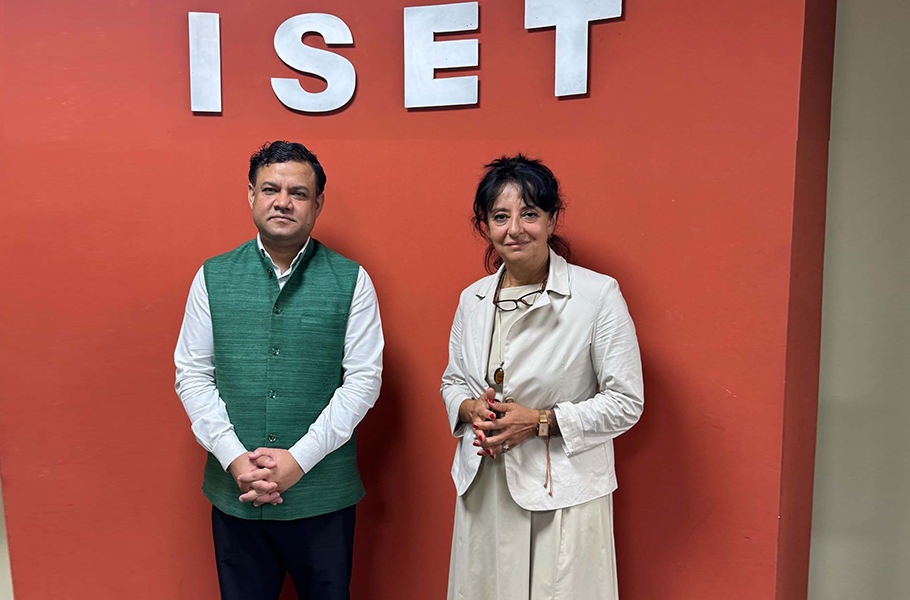
The International School of Economics (ISET) at Tbilisi State University welcomed a distinguished guest in September 2026: His Excellency Amit Kumar Mishra, India’s first Resident Ambassador to Georgia. The visit marked a significant moment in the developing relationship between India and Georgia, and it opened meaningful conversations about the future of academic cooperation between the two nations.
For students, faculty, and anyone following international relations in the South Caucasus, this visit signals something important: India’s growing engagement with Georgia is now backed by a permanent diplomatic presence, and educational institutions are among the first beneficiaries of this new chapter.
A New Era for India-Georgia Relations
In March 2026, Ambassador Amit Kumar Mishra assumed office following the official opening of the Embassy of India in Tbilisi. Until this point, India’s diplomatic engagement with Georgia had been managed through non-resident channels, limiting the depth and frequency of direct cooperation. The establishment of a resident embassy changes that fundamentally.
For Georgia, hosting India’s first Resident Ambassador represents recognition of the country’s strategic position as a gateway economy between Europe and Asia. For India, a permanent embassy in Tbilisi provides the infrastructure needed to build long-term relationships in trade, culture, technology, and — crucially — education.
Academic partnerships are often among the earliest and most durable outcomes of new diplomatic missions. Universities offer neutral ground for cooperation, create people-to-people connections that outlast political cycles, and build the human capital both countries need to deepen economic ties. Ambassador Mishra’s early visit to ISET suggests that educational collaboration will be a priority in this new phase of India-Georgia relations.
Why the International School of Economics Matters in This Partnership
The International School of Economics at Tbilisi State University is well positioned to serve as a bridge between Georgian and Indian academic communities. As one of the region’s leading institutions for economics, finance, and management education, ISET offers programs that align closely with India’s strengths and interests.
ISET’s Bachelor in Economics program provides rigorous, internationally competitive undergraduate training, while its Master in Economics and Master in Finance programs prepare graduates for careers in policy, research, banking, and international organizations. The school’s research output, faculty exchanges, and international partnerships give it the institutional maturity needed to sustain meaningful cross-border collaboration.
India, meanwhile, is home to one of the world’s largest and most sophisticated higher education ecosystems. Institutions such as the Indian Institutes of Technology, the Indian Institutes of Management, and the Delhi School of Economics have long set regional standards for economics and management education. A partnership channel between ISET and Indian academic institutions could open doors for faculty exchange, joint research projects, curriculum development, and student mobility in both directions.
What Happened During the Visit
During his visit to ISET’s campus in central Tbilisi, Ambassador Mishra met with ISET Director Tamar Sulukhia. The discussion focused on concrete opportunities for cooperation between the school and the Embassy of India, with particular attention to academic and institutional ties.
While specific initiatives will take shape over time, conversations like this typically explore several practical avenues:
- Student exchange and mobility programs that allow Georgian and Indian students to study at partner institutions abroad, gaining international exposure and building professional networks.
- Faculty and researcher exchanges that bring visiting scholars to Tbilisi and send Georgian academics to Indian universities for research collaboration and teaching.
- Joint research initiatives on topics of shared economic interest, such as trade corridors, energy security, digital economies, and regional development.
- Scholarship opportunities for Georgian students interested in studying in India, and for Indian students considering Georgia as a study destination.
- Guest lectures and public events that connect students with diplomats, policymakers, and practitioners working on India-Georgia economic relations.
ISET congratulated the Embassy of India on its opening in Georgia and wished Ambassador Mishra success in his new role. The school expressed clear enthusiasm for developing long-term cooperation — a sentiment that reflects the institution’s broader commitment to international engagement.
The Broader Context: Education Diplomacy in the South Caucasus
Ambassador Mishra’s visit fits within a larger pattern of education diplomacy that has become increasingly important in the South Caucasus. Countries in the region — Georgia, Armenia, and Azerbaijan — have worked to position their universities as international hubs, attracting students from neighboring regions, South Asia, and beyond.
Georgia’s advantages are substantial. The country offers European-standard degree programs at competitive tuition rates, a safe and affordable living environment, and a strategic location at the crossroads of Europe and Asia. Programs taught in English, such as those at ISET, make Georgia accessible to international students who might otherwise overlook the region.
India sends one of the largest cohorts of international students worldwide, and Georgian institutions have taken note. A resident embassy in Tbilisi can streamline visa processes, credential recognition, and institutional partnerships — all of which reduce friction for students considering Georgia as a study destination.
For Georgian students, the benefits flow in the other direction. India’s economy is among the fastest growing in the world, and its expertise in information technology, financial services, and development economics offers valuable learning opportunities. Students who build connections with Indian institutions during their studies position themselves well for careers in international trade, development organizations, and global finance.
What This Means for Current and Prospective ISET Students
For students at ISET — and for those considering applying — the school’s engagement with the Embassy of India carries practical implications worth understanding.
Expanded Exchange and Study Abroad Options
ISET already offers robust international opportunities, including student exchange programs and a double-diploma program with European partner universities. Adding India-focused pathways would give students access to one of the world’s most dynamic economies. Whether through semester exchanges, summer programs, or research placements, students who take advantage of these options strengthen their graduate school applications and their employability in international markets.
Research Opportunities on India-Georgia Economic Relations
Students writing theses or pursuing research interests will find a rich and underexplored topic in India-Georgia economic relations. Questions about trade patterns, investment flows, connectivity projects like the Middle Corridor, and diaspora economics all offer fertile ground for empirical work. With an embassy actively interested in fostering academic ties, students may find unprecedented access to data, interviews, and institutional support for research on these themes.
Career Pathways in International Relations and Trade
As India-Georgia economic ties deepen, demand will grow for professionals who understand both markets. Graduates with economics or finance training, language skills, and cross-cultural experience will be well positioned for roles in trade promotion, logistics, consulting, and international organizations. Students at ISET who engage with embassy events, visiting scholars, and joint programs can build exactly this profile.
How Diplomatic Visits Shape University Communities
It is worth pausing on why visits like Ambassador Mishra’s matter beyond the photo opportunities. Diplomatic engagement with universities tends to produce tangible outcomes over time, even if the initial meeting appears ceremonial.
First, embassy attention validates a university’s international standing. When a newly appointed ambassador chooses to visit a school within months of taking office, it signals that the institution is seen as a serious partner. This recognition often unlocks introductions, funding opportunities, and program partnerships that would be difficult to secure otherwise.
Second, embassies act as conveners. They connect universities with government agencies, business chambers, cultural organizations, and alumni networks. A single relationship with an embassy can generate a stream of guest speakers, internship leads, and event partnerships that enrich campus life for years.
Third, diplomatic relationships create urgency. Universities move slowly by nature, but when a partner embassy has specific goals and timelines, joint projects tend to move faster. Students entering programs in the next few years may see new India-related courses, scholarships, or exchange options materialize as a direct result of conversations that begin with visits like this one.
The Significance of a Resident Embassy for Academic Cooperation
The distinction between a resident embassy and non-resident diplomatic coverage is more than administrative. A resident ambassador lives in the country, builds sustained relationships with local institutions, and can respond quickly to opportunities as they arise. For academic cooperation specifically, this matters enormously.
Non-resident arrangements, where an ambassador based in a neighboring capital covers multiple countries, limit engagement to occasional visits and formal communications. A resident mission can host regular events, maintain continuous dialogue with university leadership, support student and scholar visa facilitation, and coordinate with Indian institutions on concrete joint projects.
Ambassador Mishra’s decision to visit ISET early in his tenure suggests an understanding of this dynamic. Education is a long game in diplomacy, and the partnerships that matter most are built through repeated, sustained engagement rather than one-time gestures.
Looking Ahead: Potential Areas of Collaboration
Based on the discussion between Ambassador Mishra and Director Sulukhia, several areas of future collaboration appear promising for the International School of Economics and the Embassy of India.
Academic and Institutional Ties
The core of the conversation centered on academic and institutional ties. This language suggests interest in formal agreements — memoranda of understanding between ISET and Indian universities, participation in joint degree structures, and membership in academic networks that span both countries.
Economic Research Collaboration
India’s experience with economic liberalization, digital public infrastructure, and rapid growth offers valuable comparative lessons for transition economies like Georgia. Joint research examining these parallels could produce insights relevant to policymakers in both countries, and ISET’s research capacity positions it well to contribute.
Student Mobility and Scholarships
India offers a range of scholarship programs for international students, including the Indian Council for Cultural Relations scholarships. With a resident embassy in Tbilisi, Georgian students may find it easier to access these opportunities. Conversely, Georgia’s growing reputation as a study destination could attract Indian students to programs like ISET’s Bachelor in Economics or Master in Finance.
A Moment of Opportunity
The visit of India’s first Resident Ambassador to the International School of Economics represents more than a single diplomatic engagement. It marks the beginning of what could become a substantial academic partnership between Georgia and India — one that creates opportunities for students, strengthens research capacity, and contributes to the broader economic relationship between the two countries.
ISET’s readiness to engage, demonstrated by the warm welcome extended to Ambassador Mishra and the school’s public expression of enthusiasm for cooperation, positions the institution to play a leading role in this developing relationship. For students and faculty, the message is clear: watch this space. The coming years are likely to bring new programs, new partnerships, and new possibilities for anyone interested in the intersection of economics, education, and international relations.
Those interested in learning more about ISET’s programs, research initiatives, or international partnerships are encouraged to explore the school’s Bachelor in Economics, Master in Economics, and Master in Finance offerings, or to follow ISET’s news and events for updates on developing international collaborations.