
Explore Entrepreneurial Innovation at the University of Georgia UG StartUp Factory
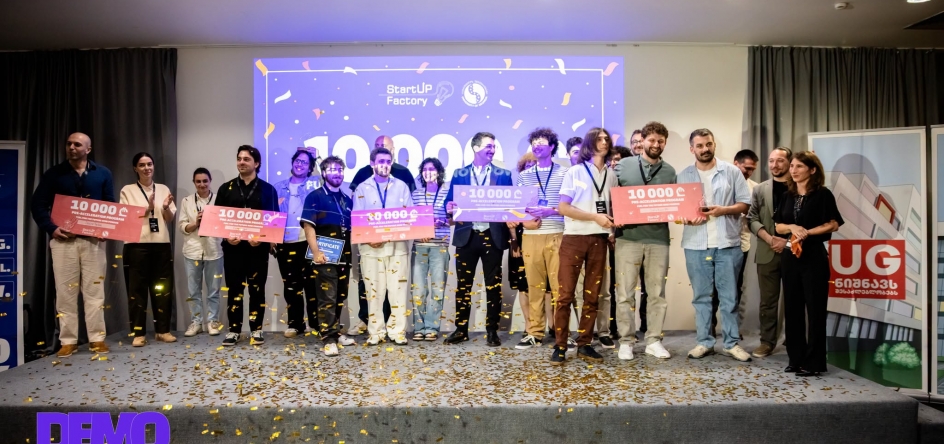
Build a successful business from the ground up by understanding the mechanics behind the University of Georgia UG StartUp Factory. On June 17, the University of Georgia’s Innovation Center hosted its annual Demo Day and Educational Conference at Holiday Inn Tbilisi. This event brought together students, startup founders, business leaders, and innovation ecosystem representatives to showcase how academic institutions can actively drive economic and technological progress. By examining the strategies employed by the UG StartUp Factory, aspiring entrepreneurs can learn how to refine their own startup ideas and secure the funding necessary for scalable growth.
How the UG StartUp Factory Cultivates Startup Ideas in Georgia
Developing a concept into a market-ready product requires more than just a flash of inspiration. The UG StartUp Factory provides a structured environment where entrepreneurial innovation thrives through disciplined execution. The center focuses heavily on a two-month pre-acceleration program designed to strip away untested assumptions and replace them with data-driven realities.
Participants in the program learn to apply Lean methodology, a framework that prioritizes reducing waste and optimizing resource allocation during the early stages of company building. Instead of spending months developing a product in isolation, founders are pushed to engage in rigorous customer validation. This involves conducting interviews, running surveys, and testing hypotheses with real potential users before writing a single line of code or committing to manufacturing.
Following customer validation, teams move into Minimum Viable Product (MVP) development. The MVP serves as the most basic version of a product that still delivers core value, allowing founders to gather actionable feedback without exhausting their capital. Finally, the program addresses investor readiness, teaching founders how to communicate their vision, market size, and financial projections effectively. Submit your application today to begin refining your business concepts through structured academic programs.
Inside the Annual Demo Day and Educational Conference
Hosting a successful pitch event requires balancing educational content with high-stakes presentations. The recent Demo Day organized by the University of Georgia accomplished this by dividing the day into two distinct segments. The morning session featured keynote talks and a comprehensive panel discussion focused on macro-level trends shaping the business landscape.
Panelists and speakers explored the implications of emerging technologies, with a specific focus on artificial intelligence and its integration into everyday business operations. The conversation also addressed the future of work, analyzing how remote collaboration, automation, and shifting employee expectations are forcing companies to rethink their operational structures. A key theme throughout the discussion was the evolving role of universities in addressing modern challenges. Rather than acting solely as traditional educational facilities, institutions of higher learning are increasingly positioning themselves as hubs for research, commercialization, and startup incubation.
The second half of the event shifted from theoretical discussions to practical application. Twelve finalist teams took the stage to present their startup ideas to a judging panel comprised of experienced investors and industry veterans. This transition from conference to competition highlights the core philosophy of the UG StartUp Factory: theoretical knowledge must ultimately translate into viable business models.
Breakdown of the 50,000 GEL Funding and Winning Startup Ideas
Securing initial capital remains one of the most significant hurdles for early-stage companies. At this year’s Demo Day, the University of Georgia Investment Fund allocated a total of 50,000 GEL in funding, distributed among five winning teams. Analyzing the winning startup ideas provides valuable insights into the types of problems currently attracting investor attention in Georgia.
SecreTable: Connecting Tourists with Local Culture
Georgia’s tourism sector continues to expand, but travelers frequently struggle to find authentic, localized dining experiences outside of standard commercial restaurants. SecreTable addresses this gap by creating a platform that directly connects tourists with local hosts for authentic Georgian dining experiences. This business model capitalizes on the growing demand for experiential travel, where visitors seek to integrate with local communities rather than simply observe them. By facilitating these intimate connections, SecreTable creates a decentralized network of culinary experiences that benefits both the local economy and the traveler.
Solution 86: Digitizing HoReCa Procurement
The Hotel, Restaurant, and Café (HoReCa) industry often relies on fragmented, manual procurement processes that lead to inefficiencies, pricing discrepancies, and inventory management issues. Solution 86 introduces a digital procurement platform specifically tailored for the HoReCa industry and its distributors. By centralizing the ordering process, the platform allows restaurants and hotels to compare supplier prices in real-time, track deliveries, and manage accounts payable from a single dashboard. This type of B2B startup idea demonstrates how applying modern software solutions to traditional industries can yield significant operational cost savings.
Campaign: AI-Powered Marketing Operations
Marketing teams frequently struggle with data silos, where valuable customer information is scattered across multiple disconnected software tools. Campaign is an AI-powered marketing operations platform designed to unify data and campaign management into a single cohesive interface. By leveraging artificial intelligence, the platform can automate repetitive tasks, segment audiences more accurately, and predict campaign performance. This startup highlights the broader trend of using AI not just for content generation, but for complex operational orchestration. Schedule a free consultation to learn more about integrating AI into your business operations.
Flexi: A Comprehensive Digital Operating System for Gyms
Fitness centers and gyms typically juggle multiple disconnected systems for class bookings, membership billing, and customer communication. Flexi solves this problem by acting as a digital operating system built specifically for gyms. It integrates memberships, class bookings, payment processing, and customer retention tools into one unified platform. For gym owners, this reduces administrative overhead and provides a 360-degree view of member engagement, allowing for targeted interventions to reduce churn rates.
AI IA Labs: GamIA and Interactive Childhood Education
The EdTech sector continues to present strong opportunities for entrepreneurial innovation, particularly in early childhood development. AI IA Labs developed GamIA, an educational platform that enhances children’s language acquisition, logical thinking, and creativity through interactive learning modules. By gamifying the educational process, the platform maintains high engagement levels while adapting to the individual learning pace of each child. This startup idea succeeds because it targets a universal pain point for parents and educators: making foundational education both effective and engaging.
The Methodology Behind Successful Pitching and MVP Development
Watch any Demo Day, and you will quickly notice that the best products do not always win—the best-executed pitches do. The UG StartUp Factory spends considerable time teaching participants how to structure their presentations to resonate with investors. A successful pitch clearly articulates the problem, explains the proposed solution, defines the target market, and outlines a realistic path to revenue.
Furthermore, the emphasis on MVP development cannot be overstated. Investors are highly skeptical of founders who claim they need millions of dollars to build a finished product before speaking to a single customer. The Lean methodology taught at the University of Georgia encourages founders to build low-fidelity prototypes, test them in the market, and iterate based on feedback. This approach de-risks the investment for backers and proves that the founding team is adaptable and responsive to market demands. Have questions? Write to us! to discuss MVP development strategies for your concept.
The Role of Universities in Driving Entrepreneurial Innovation
The success of the UG StartUp Factory underscores a critical shift in how universities contribute to the broader economy. Historically, academic institutions focused almost exclusively on research and graduate placement. Today, universities in Georgia and around the world are actively building infrastructure to support student-led ventures. By providing access to mentorship, office space, legal resources, and direct funding through instruments like the University of Georgia Investment Fund, these institutions lower the barrier to entry for young entrepreneurs.
This ecosystem approach ensures that startup ideas do not die in the dorm room due to a lack of resources. When universities foster entrepreneurial innovation, they retain local talent that might otherwise migrate to larger tech hubs. They also create collaborative opportunities between students, alumni, and local business leaders, strengthening the regional economy. The panel discussion at the Demo Day made it clear that universities must continue to adapt their curricula to include practical, hands-on business building alongside traditional academic theory.
Apply These Lessons to Your Own Entrepreneurial Journey
Review the trajectory of the five winning teams, and a common thread emerges: they identified highly specific, localized problems and built technological solutions to address them. Whether you are building a platform for the HoReCa industry or developing an AI tool for marketers, the fundamental steps remain the same. Validate your assumptions with real users, build a minimum viable product, and refine your business model based on actual market data rather than internal assumptions.
Seek out programs that force you out of your comfort zone and hold you accountable to milestones. The two-month pre-acceleration model used by the UG StartUp Factory is highly effective because it creates a sense of urgency. Founders cannot afford to procrastinate when they know a pitch day is looming. Surround yourself with peers who challenge your ideas and mentors who have successfully navigated the startup lifecycle. Share your experiences in the comments below regarding the challenges you face when developing your early-stage concepts.
Building a company requires a combination of resilience, strategic thinking, and timing. The entrepreneurial ecosystem in Georgia continues to mature, providing more resources, funding opportunities, and institutional support than ever before. Take advantage of these local resources, study the successes of programs like the UG StartUp Factory, and apply those structural lessons to your own venture. Explore our related articles for further reading on securing funding and scaling early-stage businesses.