
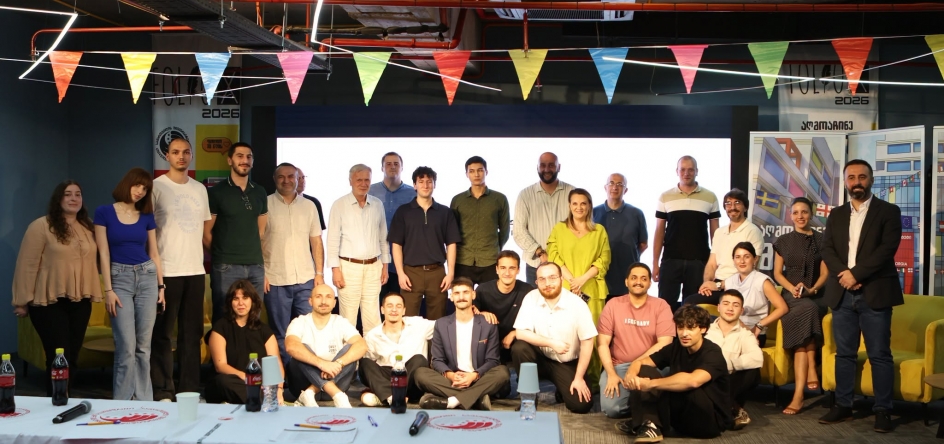
On July 25–26, 2026, the University of Georgia, in collaboration with UG School, hosted the Engineering Hackathon 2026. This intensive, two-day computer science event served as a dynamic student scientific conference designed to identify, support, and challenge young innovators. By bringing together students from multiple universities, the hackathon provided a structured environment for participants to test their technical skills against real-world engineering problems. Schedule a free consultation to learn more about upcoming technology events and academic programs.
Why Computer Science Events Like the Engineering Hackathon 2026 Matter in Georgia Technology
The rapid expansion of the technology sector in the region relies heavily on practical, hands-on experiences that bridge the gap between academic theory and industry demands. Traditional coursework builds foundational knowledge, but a computer science event of this caliber forces students to apply that knowledge under strict time constraints. The Engineering Hackathon 2026 demonstrated the University of Georgia’s commitment to fostering a robust Georgia technology ecosystem. By functioning as a student scientific conference, the event elevated the standard hackathon format, requiring participants to not only write code but to articulate the scientific and engineering rationale behind their solutions.
For young innovators, this shift from theoretical exercises to practical application is critical. Employers and industry leaders increasingly look for graduates who can navigate ambiguity, collaborate across disciplines, and deliver functional prototypes. Events like this provide a documented record of a student’s ability to perform in high-pressure environments, directly enhancing their professional viability.
Key Challenges Addressed During the University of Georgia Computer Science Event
The success of a hackathon is largely determined by the relevance and difficulty of the challenges presented. Rather than asking participants to build trivial applications, the organizers of the Engineering Hackathon 2026 focused on complex, systemic issues that affect both local and global populations.
Water Resource Accessibility and Energy Solutions
Managing water resources remains one of the most pressing engineering challenges of the 21st century. Participants tasked with water resource accessibility issues had to consider data acquisition, sensor integration, and predictive modeling. Teams likely explored ways to monitor water quality in real-time, optimize distribution networks to minimize waste, or predict infrastructure failures before they occur. Similarly, energy-focused challenges required students to look at grid management, renewable energy integration, and consumption optimization. These projects demand a deep understanding of both hardware constraints and software algorithms, pushing young innovators to think holistically about sustainable infrastructure.
Smart Transportation Systems and Underground Infrastructure Scanning
Urbanization creates immense pressure on existing city systems. At the Engineering Hackathon 2026, students tackled smart transportation systems by analyzing traffic flow data, optimizing public transit routes, or developing platforms to improve pedestrian safety. These solutions require processing large datasets and implementing efficient routing algorithms.
Equally critical is the challenge of underground infrastructure scanning. Aging subterranean systems (water pipes, electrical conduits, telecommunications lines) are difficult to map and maintain. Teams addressing this issue had to utilize concepts from geospatial analysis, ground-penetrating radar data processing, and 3D mapping. When combined with engineering safety protocols, these projects highlight how computer science intersects with civil engineering and public safety. Share your experiences in the comments below regarding the intersection of software and physical infrastructure.
Evaluation Criteria for the Engineering Hackathon 2026 Projects
Understanding how projects are judged provides valuable insight for future participants. The jury at the University of Georgia evaluated submissions based on five distinct criteria, ensuring a comprehensive assessment of each team’s output.
- Innovation: Judges looked for novel approaches to established problems. A solution that simply repurposed existing open-source code without adding unique value scored lower than one that introduced a new algorithmic approach or a unique hardware-software integration.
- Technical Complexity: This metric assessed the difficulty of the implementation. Projects that successfully integrated multiple technologies—such as machine learning models with IoT hardware—demonstrated a higher level of technical sophistication.
- Functionality: A theoretical solution is insufficient in a hackathon setting. Teams had to present a working prototype. The degree to which the software performed its intended task without crashing or requiring manual workarounds was heavily scrutinized.
- Practical Impact: Judges evaluated whether the project could be deployed in the real world. Solutions needed a clear target audience, a feasible implementation path, and a realistic assessment of potential benefits.
- Quality of the Final Presentation: Technical brilliance must be communicated effectively. Teams were judged on their ability to explain complex engineering concepts clearly, demonstrate their prototype smoothly, and answer rigorous questions from the jury.
Recognizing the Winners of the Engineering Hackathon 2026
The competitive nature of the event culminated in the recognition of three outstanding young innovators who excelled across all evaluation metrics. The jury awarded the top honors to:
- Giorgi Karchiladze – University of Georgia (UG)
- Levan Nebulishvili – University of Georgia (UG)
- Giorgi Shakiashvili – Georgian Technical University
The presence of students from both the University of Georgia and the Georgian Technical University in the winner’s circle highlights the collaborative, inter-institutional nature of the Georgia technology sector. It demonstrates that high-level engineering talent is being cultivated across multiple educational institutions. For these winners, the hackathon serves as a significant milestone that validates their skills and positions them as rising professionals in the computer science and engineering fields. Submit your application today to join future University of Georgia hackathons and showcase your skills.
How Young Innovators Benefit from Participating in Georgia Technology Hackathons
The benefits of participating in an event like the Engineering Hackathon 2026 extend far beyond the immediate competition. For young innovators, the experience acts as a catalyst for professional and personal development.
First, hackathons drastically accelerate skill acquisition. Working continuously for 48 hours on a focused problem forces participants to learn new programming languages, frameworks, or hardware interfaces on the fly. This rapid learning ability is a highly sought-after trait in the technology industry.
Second, the event provides an unparalleled networking opportunity. Participants interact with peers from other universities, forming connections that often lead to future startup ventures or collaborative research projects. Furthermore, the presence of a professional jury offers students direct access to industry experts and academics who can provide mentorship, career advice, or even job offers.
Finally, the hackathon environment teaches resilience and project management. Teams must define a realistic scope, delegate tasks based on individual strengths, and manage their time meticulously to ensure a functional prototype is ready by the deadline. When code breaks or hardware fails, teams must troubleshoot under pressure, fostering a resilience that is difficult to teach in a traditional classroom setting. Explore our related articles for further reading on student engineering competitions and career development.
Prepare for Future Computer Science Competitions at the University of Georgia
For students planning to participate in future iterations of the Engineering Hackathon, strategic preparation is essential. Success rarely comes from ad-hoc coding; it requires deliberate planning.
Form multidisciplinary teams early. A strong team typically includes a mix of backend developers, frontend or UI/UX designers, and domain experts who understand the specific engineering challenge (e.g., a civil engineering student if the topic is infrastructure). Prior to the event, teams should establish their workflow, decide on version control systems like Git, and outline communication protocols to avoid confusion during the competition.
When the challenge topics are announced, focus on solving a narrow, specific problem rather than attempting to build a massive, all-encompassing platform. A highly functional tool that solves one aspect of a problem perfectly will consistently score higher in functionality and practical impact than a sprawling application that barely works. Finally, dedicate a significant portion of the allotted time to preparing the final presentation. A well-rehearsed pitch that clearly articulates the problem, the solution, and the technical architecture will strongly influence the jury’s final decision.
Moving Forward with Engineering Excellence
The Engineering Hackathon 2026 at the University of Georgia represents a vital component of modern engineering education. By providing a platform for young innovators to tackle complex issues like water accessibility, smart transportation, and infrastructure scanning, the University of Georgia reinforces its role as a leader in Georgia technology. The institution’s adherence to high standards, reflected in its ISO 27001 and ISO 9001 certifications, ensures that events like this are organized with rigorous quality assurance, providing a reliable and professional environment for student development.
As the boundaries between software and physical engineering continue to blur, the demand for professionals who can navigate both domains will only increase. Participating in computer science events that emphasize practical, real-world impact is one of the most effective ways for students to prepare for this future. Whether you are an aspiring software engineer, a hardware tinkerer, or a data scientist, the skills honed in these competitive environments will form the foundation of a successful technology career. Have questions? Write to us!