
Examine Frederick University’s Research Excellence: Professor Andreas Poullikkas Ranks Among Top Global Scientists in Sustainable Energy
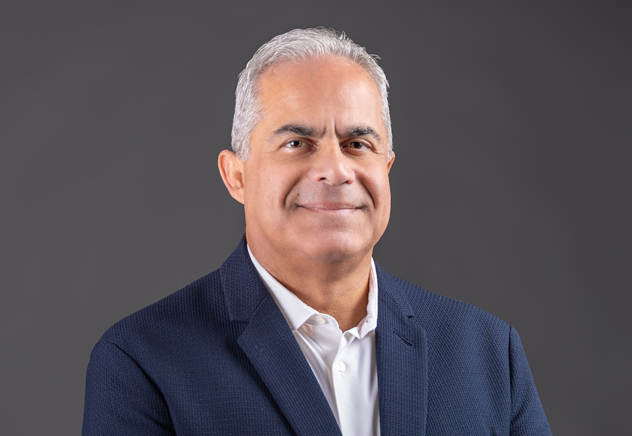
Research output and faculty expertise are critical metrics for evaluating the quality of any higher education institution. Recently, Frederick University demonstrated its commitment to academic rigor when Professor Andreas Poullikkas, a faculty member in the School of Engineering, was recognized as a Highly Ranked Scholar by the ScholarGPS platform. This distinction places him among the top 0.05% of researchers globally in the fields of sustainable energy and renewable energy. For prospective students, industry professionals, and academic peers, this recognition serves as a clear indicator of the high-level research environment fostered at Frederick University.
Understanding the ScholarGPS Distinction and Methodology
Evaluating academic impact requires objective, data-driven metrics. The ScholarGPS platform provides this by analyzing the performance of over 30 million scientists across more than 55,000 institutions in over 200 countries. Rather than relying solely on volume, the platform utilizes comprehensive citation indices—most notably the h-index—to evaluate both the overall career trajectory and the recent performance of individual researchers.
The h-index measures both the productivity and citation impact of a researcher’s publications. A high h-index indicates that a scientist has produced a substantial number of papers that have consistently been cited by other researchers. By placing Professor Andreas Poullikkas in the top 0.05% of global scientists, ScholarGPS highlights a sustained record of influential publications. This level of validation ensures that the academic programs at Frederick University are informed by faculty who are actively shaping global scientific discourse rather than merely observing it.
Schedule a free consultation to learn more about our engineering programs and research opportunities.
Analyze the Specific Rankings in Sustainable Energy and Renewable Energy
Professor Poullikkas achieved highly specific and impressive rankings that underscore his specialized expertise. He ranked 10th worldwide in the broad field of sustainable energy, 47th worldwide in renewable energy, and 296th worldwide in the energy sector overall. Understanding the distinction between these fields provides valuable context for his work.
Renewable energy typically refers to specific sources of power—such as solar, wind, hydroelectric, and geothermal—that are naturally replenished. Sustainable energy encompasses a broader scope. It includes renewable sources but also integrates the systems, policies, and economic models required to ensure long-term environmental and social viability. Ranking 10th globally in sustainable energy indicates that Professor Poullikkas does not merely research energy generation; he analyzes and optimizes the complex systems and markets that make green energy practical and scalable. His 296th ranking in the overall energy sector further proves that his research holds significant weight even when measured against conventional fossil fuel and nuclear energy research.
The Impact of Research Excellence on the Educational Landscape in Cyprus (Northern) and Beyond
Geographic location often influences a student’s choice of university, but academic excellence transcends borders. Frederick University is based in the Republic of Cyprus, yet the impact of such high-level research excellence resonates across the entire island. Prospective students evaluating higher education options across the region, including those based in Cyprus (Northern), frequently look for institutions with demonstrated international standing. Having a faculty member ranked among the top scientists worldwide acts as a powerful magnet for ambitious students who want to study close to home without compromising on the quality of their education.
Furthermore, energy policy and grid infrastructure are inherently regional issues. The island of Cyprus faces unique energy challenges, including isolated grid systems and a heavy historical reliance on imported fuels. Research focused on sustainable energy optimization directly addresses these local challenges while contributing to global knowledge. Students studying in this region benefit from a curriculum and research environment that is highly relevant to the geopolitical and infrastructural realities of their immediate surroundings.
Explore our related articles for further reading on regional academic developments and energy initiatives.
Advancing Energy Systems and Markets Through Applied Research
The core of Professor Poullikkas’s recognized work lies in the development of sustainable energy technologies and the optimization of energy systems and markets. What does this mean in practical terms? It involves moving beyond theoretical physics to address the engineering, economic, and regulatory hurdles of decarbonization.
Optimizing energy markets requires sophisticated modeling to balance supply and demand, especially as variable renewable energy sources like wind and solar are integrated into the grid. Researchers in this field develop algorithms and policy frameworks that ensure grid stability, prevent blackouts, and keep electricity costs manageable for consumers. By focusing on these systemic challenges, the research conducted at Frederick University’s School of Engineering directly supports the transition to a low-carbon economy. Students exposed to this research learn to view energy not just as an engineering problem, but as a complex socio-technical system requiring multidisciplinary solutions.
Benefits of Studying Under Internationally Recognized Faculty
For students considering a degree in engineering, environmental science, or public policy, the presence of highly ranked faculty members offers distinct academic and professional advantages.
Direct Access to Cutting-Edge Developments
Textbooks often lag behind current scientific consensus. When students learn from researchers who are actively publishing and being cited by their global peers, they receive information that reflects the current state of the art. Professor Poullikkas brings his real-world research findings directly into the classroom, ensuring that Frederick University students are learning the most advanced methodologies in energy systems analysis.
Opportunities for Undergraduate and Postgraduate Research
Highly active researchers require assistance with data collection, literature reviews, and laboratory work. This creates valuable opportunities for students to participate in funded research projects. Engaging in research as an undergraduate or postgraduate student builds critical thinking skills, provides hands-on experience with industry-standard software, and results in co-authored publications that significantly strengthen a graduate school application or a resume.
Professional Networking and Mentorship
A professor ranked among the top 0.05% globally maintains a vast network of international collaborators. Students who distinguish themselves academically can leverage these networks to secure internships, attend international conferences, or find employment with leading energy firms and research institutes worldwide. The mentorship provided by a highly accomplished academic can guide a student’s career trajectory for decades.
Submit your application today to study under leading researchers and gain hands-on experience in sustainable energy.
Frederick University’s Strategic Commitment to Academic Excellence
The recognition of Professor Poullikkas is not an isolated event, but rather a reflection of Frederick University’s broader institutional strategy. As noted by Professor George Demosthenous, the Rector of Frederick University, the institution actively prioritizes the appointment and support of distinguished academics. Enhancing academic excellence and pioneering research are explicitly stated strategic goals of the university.
This strategic focus requires significant investment in research infrastructure, laboratory equipment, and faculty development. By creating an environment where researchers can thrive, Frederick University ensures that its academic programs remain rigorous and relevant. The university’s support for its academic staff translates directly into a higher quality educational experience for the student body. When an institution celebrates and promotes the achievements of its faculty, it fosters a culture of intellectual curiosity and high performance that benefits everyone on campus.
Shape the Future of Energy with Frederick University
The global transition to sustainable energy is the defining engineering and economic challenge of the 21st century. Addressing climate change, ensuring energy security, and modernizing electrical grids require a new generation of highly skilled professionals. The research excellence demonstrated by Professor Andreas Poullikkas proves that Frederick University is actively contributing to the global knowledge base required to solve these complex problems.
For students passionate about making a tangible impact on the environment and energy sectors, choosing an institution with proven research capabilities is a critical first step. Frederick University offers an academic environment where theoretical knowledge meets practical, system-level application. By studying at an institution that supports top-tier global research, students position themselves at the forefront of the sustainable energy transition.
Have questions about our engineering programs or research facilities? Write to us!