Alte University Shares Strategic Vision for Higher Education in Georgia at the Athens International Staff Week
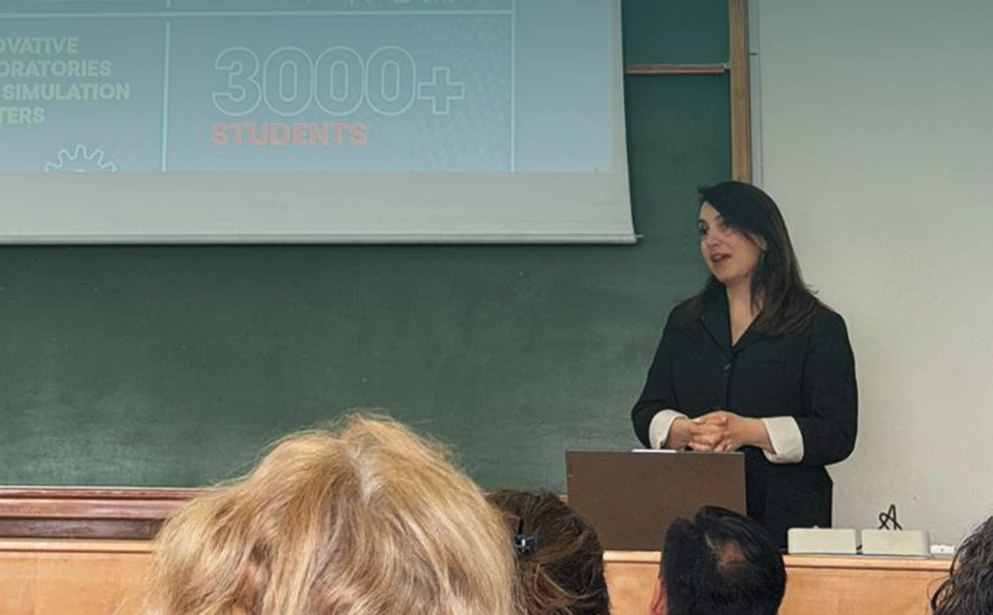
International collaboration has become a foundational element for academic institutions aiming to provide high-quality, globally relevant education. Recently, Alte University demonstrated its commitment to this principle by participating in the 12th International Staff Week hosted by the Athens University of Economics and Business (AUEB). This gathering served as a critical platform for academic leaders to exchange best practices, discuss operational strategies, and analyze the evolving landscape of global higher education.
Building Global Connections in Higher Education
International staff weeks are structured professional development events designed to foster cooperation between universities across different countries. These events go beyond standard networking; they are intensive forums where administrators, faculty heads, and operational leaders share concrete methodologies for improving university governance, student services, and academic quality. By participating in the International Staff Week in Athens, Alte University actively positioned itself within a European network of academic institutions dedicated to continuous improvement.
For universities in Georgia, engaging with established European institutions like AUEB provides a dual benefit. It allows local academic leaders to benchmark their operations against international standards while simultaneously sharing the unique perspectives and innovative approaches developing from the Georgian higher education sector. This bidirectional exchange of knowledge is essential for cultivating an academic environment that prepares students for both local and international career markets.
Schedule a free consultation to learn more about Alte University’s academic programs.
Alte University’s Strategic Representation in Athens
The effectiveness of an institution’s participation in international forums depends heavily on the expertise of its representatives. Alte University dispatched two key members of its leadership team to Athens: Tamar Makharadze, Vice President for Finance and Operations, and Maia Melikidze, Head of the Bachelor’s Program in Business Administration. This combination of financial operational leadership and academic program management ensured that Alte University could contribute to, and extract value from, a wide range of discussions.
Having a Vice President for Finance and Operations attend an academic staff week highlights a crucial reality of modern higher education: academic innovation cannot occur without robust operational and financial strategies. Conversely, having the Head of a flagship Business Administration program ensures that the operational capabilities are directly tied to classroom outcomes and curriculum development. Together, Makharadze and Melikidze provided a comprehensive view of how Alte University balances administrative efficiency with academic rigor.
Addressing Modern Educational Challenges
During the 12th International Staff Week, representatives from various universities presented on the pressing issues facing their institutions. The presentations given by the Alte University delegation focused on two distinct but interconnected challenges: student engagement and the integration of advanced technology into the curriculum.
Motivating the New Generation of Students
Tamar Makharadze’s presentation centered on Alte University’s rapid institutional achievements and its strategic vision for the future, with a specific focus on student motivation. Higher education institutions worldwide are grappling with shifting student demographics. Today’s students bring different expectations regarding how they consume information, interact with faculty, and apply their knowledge.
Makharadze addressed the need to move beyond traditional lecture-based instruction toward more interactive, experiential learning models. Motivating the new generation requires universities to demonstrate the direct applicability of their coursework to real-world problems. This involves integrating practical projects, offering flexible learning pathways, and creating a campus culture that values student voices in institutional decision-making. By sharing Alte University’s strategies in Athens, Makharadze provided other institutions with actionable insights into how a relatively young university in Georgia can rapidly adapt to the needs of modern learners.
Submit your application today to join a forward-thinking academic community.
Integrating Artificial Intelligence into Business Curricula
Maia Melikidze’s presentation tackled the significant impact of Artificial Intelligence (AI) on business education. As AI tools become ubiquitous in the workplace, business schools face the urgent task of re-evaluating their curricula. Melikidze emphasized that teaching AI is no longer confined to computer science departments; it is a critical component of modern business administration.
Business students must understand how to leverage AI for data analysis, strategic decision-making, marketing optimization, and operational efficiency. Melikidze discussed how Alte University is adapting its Business Administration program to ensure graduates are not just aware of AI but are capable of managing and directing AI-driven initiatives within organizations. This forward-looking approach ensures that graduates remain competitive in a job market that is increasingly automated and data-centric.
Bridging the Gap Between Business and Academia
A recurring theme in Melikidze’s presentation was the necessity of closing the gap between what universities teach and what employers require. This disconnect has long been a criticism of higher education, but the rapid pace of technological advancement has made resolving it more urgent than ever.
To address this, Alte University places a strong emphasis on turning market needs into tangible educational opportunities. This requires close collaboration between businesses and academic institutions. By maintaining active partnerships with industry leaders, Alte University can gather direct feedback on the skills graduates lack and rapidly integrate those competencies into the curriculum. This collaboration also fosters entrepreneurship, providing students with the mentorship and resources needed to start their own ventures rather than solely preparing them for traditional employment.
Enhancing practical learning components—such as internships, live case studies, and capstone projects with real companies—is a direct result of this business-academia collaboration. Students benefit by building professional networks and gaining hands-on experience before they graduate, while employers benefit from access to a pipeline of work-ready talent.
Explore our related articles for further reading on educational innovations.
The Impact of Global Forums on Georgia’s Higher Education Landscape
When leadership from Georgian universities participates in events like the International Staff Week in Athens, the benefits extend far beyond the individual institution. The integration of global best practices into local universities elevates the entire higher education sector in Georgia. As institutions like Alte University implement cutting-edge educational approaches learned abroad, they set new benchmarks for teaching quality and student support within the region.
This international exposure also enhances the reputation of Georgian higher education on a global scale. When prospective students and international partners see that Georgian universities are actively engaged in European academic dialogues, it builds trust and credibility. It signals that a degree earned in Georgia is backed by an institution that adheres to international standards of excellence and is actively engaged with global academic trends.
Preparing Students for a Competitive Global Market
The ultimate goal of participating in international staff weeks and revamping academic programs is to improve student outcomes. The insights brought back from Athens by Makharadze and Melikidze are already being utilized to refine the student experience at Alte University. By focusing on student motivation, AI integration, and practical skill development, the university is directly addressing the demands of the modern economy.
Students entering the job market today must be adaptable, technologically literate, and capable of critical thinking. They need to understand global market dynamics while also being able to execute local strategies. The strategic vision shared by Alte University’s representatives in Athens reflects a curriculum designed to produce exactly this type of graduate. The focus is shifting from merely transmitting knowledge to facilitating the development of professional competencies that will sustain students throughout their careers.
Have questions? Write to us to learn how Alte University can support your academic goals.
Conclusion: A Commitment to Continuous Improvement
Alte University’s presence at the 12th International Staff Week in Athens underscores a clear commitment to continuous institutional improvement. By sending high-level representatives to engage with international peers, the university actively seeks out the strategies and partnerships necessary to build a world-class learning environment in Georgia. The focus on motivating students, integrating AI into business programs, and strengthening ties with the business community demonstrates a pragmatic, forward-looking approach to higher education. As the global academic landscape continues to evolve, Alte University’s active participation in these international forums ensures that its students and faculty remain at the forefront of educational excellence.