How University of Georgia Advances AI Education and Prepares Students for the Professions of the Future
Understanding the Impact of New Technologies in Georgia’s Educational Landscape
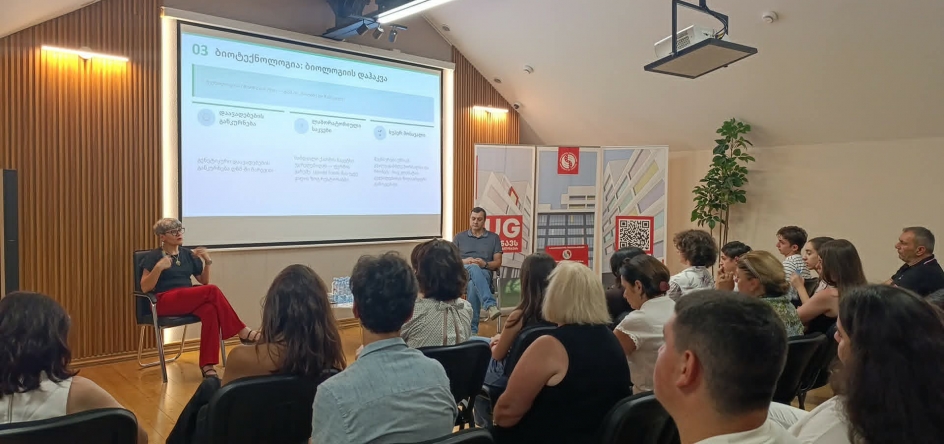
The integration of artificial intelligence and advanced digital tools is fundamentally altering how educational institutions operate and how students prepare for their careers. In Georgia, the University of Georgia has taken a proactive approach to this shift by bringing discussions on New Technologies directly to regional communities. Recently, the university hosted educational meetings in Zugdidi and Poti specifically designed for high school students and prospective university applicants. These sessions focused on the intersection of machine learning, digital innovation, and career readiness.
Bringing these discussions to cities like Zugdidi and Poti is a deliberate strategy to decentralize access to tech education. Historically, major tech hubs and specialized seminars are concentrated in the capital. By organizing regional events, the University of Georgia ensures that students across the country have access to accurate, up-to-date information about the digital economy. This initiative helps local communities understand that the tech revolution is not limited to Tbilisi or Silicon Valley; it is a national and global phenomenon that creates local opportunities.
Submit your application today to join a forward-thinking academic community that prioritizes technological literacy and regional outreach.
The Core of AI Education: What Students Need to Know
During the regional meetings, Nana Dikhaminjia, the Technology Advisor to the Rector of the University of Georgia, led detailed sessions breaking down the realities of modern AI education. For many high school students, artificial intelligence remains an abstract concept popularized by science fiction. The goal of these sessions was to ground AI in practical, everyday realities, demonstrating how it currently functions in industries ranging from healthcare to logistics.
Redefining Knowledge Acquisition and Processing
One of the primary focuses of the discussion was how AI changes the way humans acquire, process, and share knowledge. Traditional education models rely heavily on rote memorization and linear information processing. However, in an era where AI systems can retrieve and synthesize vast amounts of data in seconds, the human role shifts from being a mere repository of information to a critical evaluator of that information. Students were taught that their future success will depend less on knowing the answers and more on knowing how to ask the right questions and evaluate the data provided by algorithmic systems.
Bridging the Gap Between Theory and Practice
Effective tech education cannot exist solely in textbooks. The University of Georgia emphasizes applied learning, ensuring that students understand the theoretical frameworks of algorithms and data structures while simultaneously gaining hands-on experience with actual software and hardware. This dual approach is essential for developing competencies that employers actively seek. By exposing prospective students to these methodologies early, the university sets clear expectations for the rigorous, practical nature of its technology and engineering programs.
Schedule a free consultation to learn more about the specific technology and engineering curricula offered by the university.
Insights from Industry Leaders: The Silicon Valley Perspective
A significant highlight of the meetings in Zugdidi and Poti was the participation of Mikheil Tsiklauri, a Technology Lead at Apple. Having a professional directly involved in the development of products at one of the world’s most valuable companies provided students with a rare, firsthand look at the global tech industry.
The Evolution of the Global Technology Industry
Tsiklauri shared insights from his extensive experience in Silicon Valley, detailing the rapid evolution of the technology sector. He explained how the industry has moved from simple hardware manufacturing to complex, interconnected ecosystems of software, cloud computing, and machine learning. For students in Georgia, understanding this global context is vital. It illustrates that a career in technology is no longer just about writing code; it involves system architecture, user experience design, data security, and cross-disciplinary collaboration.
Building a Culture of Innovation
Beyond technical skills, Tsiklauri emphasized the importance of a culture of innovation. In Silicon Valley, failure is often viewed as a necessary step in the iterative design process. He discussed how Georgian students and professionals can adopt this mindset, moving away from a fear of failure toward a more experimental, hypothesis-driven approach to problem-solving. This cultural shift is a fundamental requirement for anyone looking to participate in the Professions of the Future, where adaptability and creative thinking are just as important as technical proficiency.
Have questions? Write to us! We can connect you with academic advisors who can clarify how our programs foster an innovative mindset.
Engineering and Technology Programs at the University of Georgia
The discussions in Zugdidi and Poti served as a direct introduction to the technology and engineering programs available at the University of Georgia. The university has structured these programs to directly address the demands of the rapidly evolving digital landscape. Rather than offering static degrees, the curriculum is regularly updated to reflect current industry standards, ensuring that graduates possess relevant skills upon entering the job market.
Students enrolled in these programs are exposed to a comprehensive suite of subjects, including computer science, data science, software engineering, and information systems security. The faculty comprises experienced academics and industry practitioners who bring real-world scenarios into the classroom. Furthermore, the university maintains partnerships with local and international tech companies, facilitating internships and practical training that bridge the gap between academic study and professional employment.
Preparing for the Professions of the Future in Georgia
As automation and AI continue to advance, certain traditional jobs will inevitably decline, while entirely new roles will emerge. High school students currently planning their academic futures must focus on developing skill sets that are resilient to automation. Critical thinking, complex problem-solving, emotional intelligence, and advanced technical literacy are the cornerstones of the future job market.
For prospective applicants in Georgia, choosing a university that understands these macroeconomic shifts is critical. The University of Georgia positions itself as an institution that not only reacts to industry changes but anticipates them. By integrating AI concepts across various disciplines—not just in computer science, but in business, law, and the humanities—the university ensures that all its graduates are digitally fluent and capable of leading in their respective fields.
Students should actively seek out programs that offer interdisciplinary studies. The intersection of AI with fields like agriculture, healthcare, and logistics presents massive opportunities for Georgia’s economy. A student who understands both the technical aspects of machine learning and the specific needs of the local agricultural sector, for example, will be highly valuable to domestic and international companies operating within the country.
Regional Access to Quality Tech Education
The success of the events in Zugdidi and Poti was made possible through strategic partnerships with local organizations. The University of Georgia extended its gratitude to the American Corner Zugdidi and the Youth Hub Poti for providing the venues and logistical support necessary to host these meetings. These partnerships are a testament to the power of community collaboration in advancing education.
American Corners and Youth Hubs play a critical role in the Georgian educational ecosystem. They serve as accessible community centers where youth can access resources, attend workshops, and connect with mentors. By utilizing these existing networks, the University of Georgia effectively amplifies its reach, ensuring that high-quality information regarding New Technologies and career planning penetrates regional areas. This strategy helps to mitigate the urban-rural educational divide, ensuring that talent is nurtured regardless of a student’s geographic location within the country.
Moving forward, continued investment in regional educational infrastructure and partnerships will be essential. As the demand for tech-savvy professionals grows, universities and local organizations must work together to create continuous learning pathways. This includes offering regular workshops, coding boot camps, and mentorship programs in regional hubs, ultimately creating a robust, nationwide pipeline of talent ready to engage with the Professions of the Future.
Explore our related articles for further reading on how to build a successful career in technology and engineering.