Explore Student Initiatives and Intellectual Games at the International School of Economics ISET in Georgia
How Student-Led Academic Events Shape the ISET Experience
Evaluating a university goes beyond reviewing curriculum designs and faculty credentials. The campus culture, driven largely by student initiatives, plays a critical role in shaping a student’s professional and personal development. At the International School of Economics ISET in Georgia, the academic environment extends well beyond the traditional classroom setting. Students regularly take the lead in organizing academic events that challenge their peers, foster collaboration, and build essential soft skills.
Higher education institutions thrive when students actively participate in campus life. Organizing and participating in extracurricular activities provides practical experience in project management, teamwork, and effective communication. For students studying complex subjects like economics and finance, these outlets offer a necessary balance to rigorous quantitative coursework. By stepping into organizational roles, students learn to manage deadlines, coordinate with diverse groups, and execute large-scale projects successfully.
Schedule a free consultation to learn more about campus life and student engagement opportunities.
The Structure and Appeal of Intellectual Games in Higher Education
Among the various extracurricular activities available, intellectual games hold a unique appeal for students in analytical fields. The “What? Where? When?” game, originally popularized in the Soviet Union and now played internationally, is a structured trivia game that relies on logic, teamwork, and lateral thinking rather than rote memorization. A jury reads a question, and a team has a limited time to discuss and formulate a single, concise answer.
For students at the International School of Economics ISET, this format is particularly relevant. The skills required to succeed in intellectual games directly mirror those needed for academic and professional success in economics and finance. Players must analyze limited information, identify underlying patterns, debate conflicting hypotheses with their teammates, and arrive at a consensus under strict time constraints. This dynamic closely resembles the environment of a trading floor, a policy analysis group, or a strategic consulting firm, where quick, data-informed decision-making is paramount.
Integrating intellectual games into the ecosystem of academic events creates a stimulating environment. It encourages students to apply their classroom knowledge in unconventional ways, testing their general awareness, logical reasoning, and ability to work cohesively under pressure.
Inside the Recent ISET “What? Where? When?” Tournament
On June 1, 2026, the International School of Economics ISET in Georgia hosted a highly anticipated edition of the “What? Where? When?” intellectual game. This event was not overseen by faculty or administrators; it was organized entirely by the dedicated members of the ISET “What? Where? When?” club. The organizing committee included Luka Isakadze, Telmani Iakobishvili, Ekaterine Rostomashvili, Anano Khosroshvili, Ana Mardaleishvili, Amiran Rogava, Ana Aspandze, Mariam Tatulashvili, and Nino Kapanadze.
Bringing an intellectual game of this scale to life requires meticulous planning. The student organizers were responsible for every logistical detail, from curating and testing the questions to ensure they were fair and challenging, to managing the registration process, setting up the venue, and overseeing the flow of the competition on the day of the event. Their collective effort ensured a smooth execution that provided a seamless experience for all participants.
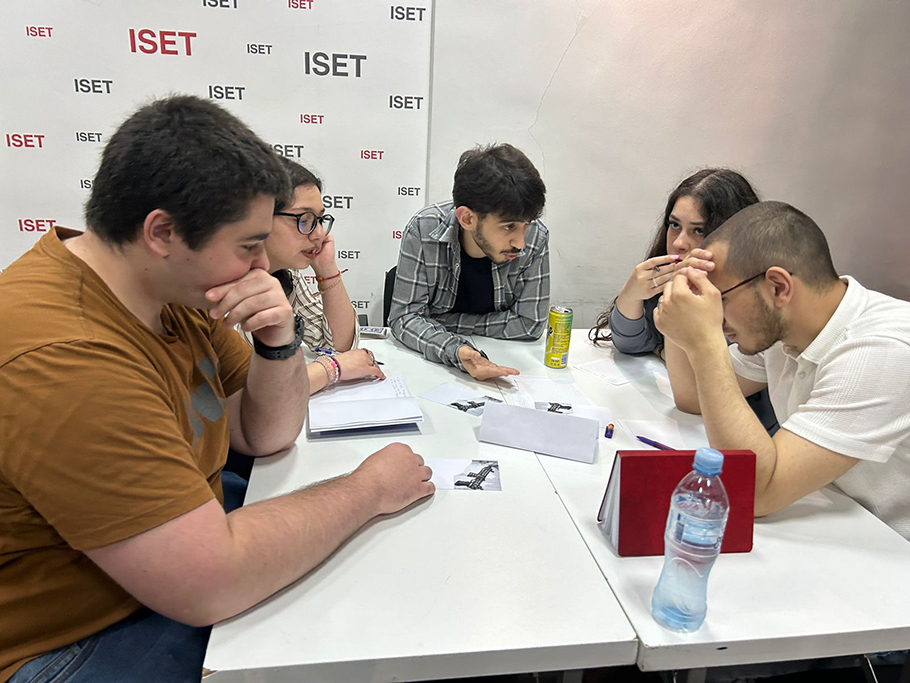
The competition brought together numerous teams of ISET students, creating a lively and engaging atmosphere. The dynamic nature of the game fostered an environment of intense focus and spirited discussion, as teams raced against the clock to solve complex puzzles and trivia questions.
Building Leadership Skills Through ISET Student Initiatives
The success of the June tournament highlights the strength of student initiatives at ISET. When students take ownership of academic events, they cultivate leadership skills that cannot be taught in a textbook. Nino Kapanadze and the rest of the organizing team demonstrated a high degree of initiative and dedication, traits that are highly valued in the labor market.
Organizing a public event requires navigating unexpected challenges, managing interpersonal dynamics, and maintaining a clear vision from the planning phase through to implementation. For the students involved, this experience serves as a practical laboratory for leadership. They learn how to delegate tasks, motivate their peers, and take responsibility for the final outcome. These are the exact competencies that employers in Georgia and internationally look for when hiring graduates from top-tier economics and finance programs.
Furthermore, these student initiatives create a self-sustaining culture of engagement. When upperclassmen organize successful events, they set a precedent and provide a blueprint for future cohorts, ensuring that the tradition of active campus life continues year after year.
Share your experiences in the comments below regarding the impact of extracurricular activities on your academic career.
The Role of Academic Events in Fostering a Collaborative Community
While the International School of Economics ISET is known for its rigorous academic standards, events like the “What? Where? When?” game play a vital role in building a cohesive community. The student body comprises individuals from the Bachelor in Economics, Master in Economics, and Master in Finance programs. Intellectual games provide a neutral ground where students from different year groups and different programs can interact outside of their specific core classes.
This cross-program interaction is invaluable. A first-year bachelor student might team up with a second-year master’s student, allowing for mentorship and the exchange of different perspectives. The collaborative nature of the game—where teams must agree on a single answer—forces participants to communicate effectively, respect opposing viewpoints, and build consensus. In an academic environment that often emphasizes individual grades and test scores, these team-based academic events remind students of the importance of collective success.
Explore our related articles for further reading on student clubs and community building at ISET.
Recognizing Excellence: The Winning Team and Future Competitions
The culmination of the June 2026 tournament was the victory of the team “Ted’s Drakarys.” Comprised of Tega Khalvashi, Anano Bitsadze, Mariam Tsiklauri, Luka Bitsadze, Keso Matiashvili, and Petre Mari, the team demonstrated exceptional logical reasoning and teamwork throughout the rounds. Recognizing the winners is an important aspect of these academic events, as it celebrates intellectual agility and motivates the broader student body to participate in future competitions.
The success of “Ted’s Drakarys” also highlights the competitive yet friendly spirit that defines the International School of Economics ISET in Georgia. Winning requires not only individual intelligence but also the ability to synthesize the brainpower of the entire group. As the ISET community congratulates the winners, the focus simultaneously shifts toward future iterations of the game. The continued success of the “What? Where? When?” club ensures that intellectual games will remain a staple of the university’s extracurricular landscape.
Why Prospective Students Should Value Active Campus Cultures
For prospective students evaluating their options for higher education in Georgia, the presence of strong student initiatives should be a major deciding factor. A university that supports and encourages student-led academic events is one that is invested in the holistic development of its students.
When reviewing potential universities, look beyond the course catalogs. Investigate the types of clubs that are active on campus. Look for evidence of student-organized conferences, seminars, and competitions. An environment where students are empowered to create their own intellectual games and events is an environment that breeds confidence, independence, and professional readiness. It indicates a supportive administration and a student body that is engaged, ambitious, and driven.
Choosing to study at an institution like the International School of Economics ISET means choosing an education that encompasses both hard analytical skills and the soft skills necessary to lead teams and manage projects. The lively atmosphere of the “What? Where? When?” tournament is a direct reflection of this comprehensive educational philosophy.
Submit your application today to join a vibrant academic community that values both rigorous study and dynamic student initiatives.
Conclusion
The recent “What? Where? When?” intellectual game organized by ISET students stands as a clear example of how extracurricular activities enhance the university experience. Through the efforts of the dedicated organizing committee and the participation of teams like “Ted’s Drakarys,” the event reinforced the importance of logic, teamwork, and quick thinking. For the International School of Economics ISET in Georgia, fostering these student-led academic events is a deliberate strategy to produce well-rounded graduates who are prepared to tackle complex challenges in their future careers.
Have questions? Write to us to learn more about how you can get involved in student life at ISET!