
Evaluate the Impact of False Discovery Control on Impulse Responses Research at the International School of Economics ISET
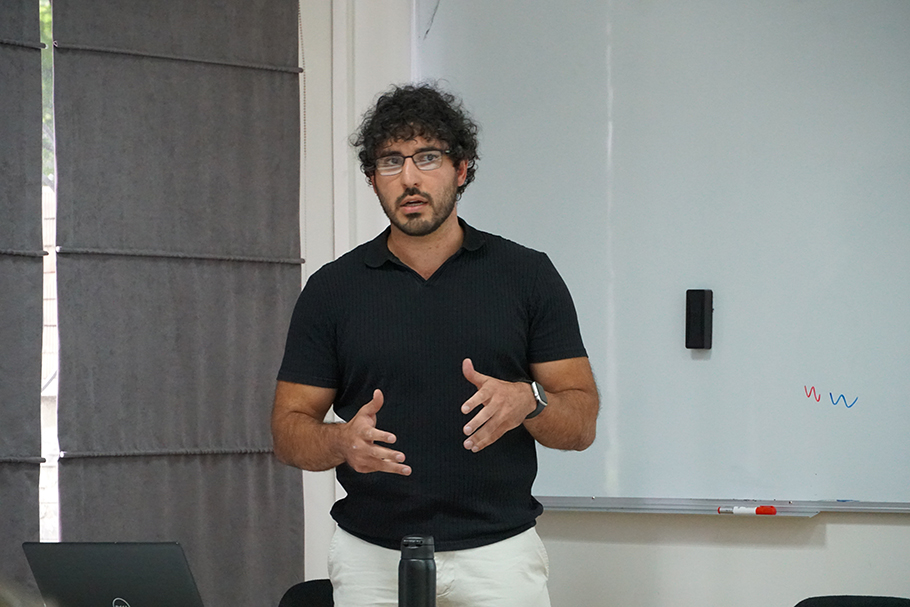
Macroeconomic modeling requires precise statistical tools to determine how economic shocks ripple through various sectors over time. During a recent session of the ISET seminar series, Giorgi Nikolaishvili, Ph.D. and Assistant Professor at Wake Forest University, presented a compelling case for updating these tools. His research paper, “Scanning for Significance: False Discovery Control for Impulse Responses,” addresses a critical flaw in how economists test empirical models. By introducing false discovery control into standard macroeconomic analysis, researchers can significantly reduce the number of false positives that currently plague the literature. Schedule a free consultation to learn more about how advanced econometric methods are integrated into modern economics curricula.
Understanding the Complexities of Impulse Responses Research
To appreciate the significance of Nikolaishvili’s work, one must first understand the nature of impulse responses research. In macroeconomics, Vector Autoregression (VAR) models are frequently used to capture the linear interdependencies among multiple time series. When an economic shock occurs—such as a sudden change in monetary policy or an unexpected fluctuation in oil prices—economists use impulse response functions (IRFs) to trace the effect of that shock on other economic variables over subsequent time periods.
For example, an economist might want to observe how a hike in interest rates affects inflation, GDP growth, and employment over the next 20 quarters. To do this, they must test the statistical significance of the response at each individual time horizon. If the model spans 20 quarters and includes four variables, the researcher is effectively conducting dozens, if not hundreds, of simultaneous hypothesis tests.
This massive scale of testing introduces a severe statistical vulnerability. Standard methods evaluate each test in isolation, ignoring the cumulative probability of making errors across the entire system. As a result, findings that appear statistically significant in published papers may actually be the product of random chance, leading to incorrect policy recommendations and flawed economic theories.
The Problem with Traditional Statistical Methods in Macroeconomics
The core issue highlighted during the ISET seminar series presentation revolves around the multiple comparisons problem. When a researcher sets a standard significance level of 5 percent for a single test, they accept a 5 percent chance of a false positive (Type I error). However, when testing 100 impulse responses simultaneously at that same 5 percent threshold, the expected number of false discoveries jumps to five. In large macroeconomic models, the problem scales exponentially.
Historically, economists have relied on two primary approaches to handle this, both of which are fundamentally flawed. The first approach is to ignore the problem entirely, using pointwise confidence intervals. This method drastically inflates the false discovery rate, meaning a large share of the reported “significant” effects are actually statistical noise. The second approach employs severe corrections, such as the Bonferroni correction, which controls the family-wise error rate. While this prevents false positives, it is so overly strict that it eliminates true positives as well, rendering the analysis virtually powerless to detect genuine economic effects.
Nikolaishvili’s presentation clearly demonstrated that standard methods either flag too many false findings or are too strict to detect any meaningful effects at all. This binary failure limits the practical utility of macroeconomic models and forces researchers into a difficult trade-off between sensitivity and specificity.
Introducing False Discovery Control to Economic Models
To resolve this dilemma, Nikolaishvili and his coauthor propose applying false discovery control directly to impulse responses research. Originally developed in the fields of genomics and data science—where researchers must test thousands of genes simultaneously—false discovery rate (FDR) control offers a balanced middle ground. Instead of trying to eliminate all false positives (like the Bonferroni method), FDR control limits the expected proportion of false positives among all the effects that are declared significant.
By capping the share of reported effects that can be false, this methodology allows economists to retain statistical power while still enforcing rigorous safeguards against random noise. During the seminar, Nikolaishvili showed that applying false discovery control can literally rewrite the conclusions of well-known macroeconomic studies. Effects that previously appeared highly significant may be revealed as statistical artifacts, while subtle but genuine effects that were previously masked by strict corrections can finally be identified.
Highlighting the ISET Seminar Series as a Hub for Economic Discourse
The presentation by Giorgi Nikolaishvili is a prime example of the high-caliber academic discourse fostered by the International School of Economics ISET. The ISET seminar series serves as a vital bridge between global academic research and the local academic community in the Caucasus region. By hosting leading international scholars like Nikolaishvili, as well as professionals such as Levan Nadibaidze, Robizon Khubulashvili, and Anders Olofsgård, ISET ensures that its students and faculty are exposed to the very latest developments in economic science.
The engaging discussion that followed Nikolaishvili’s presentation—involving faculty, researchers, and students—underscores the institution’s commitment to critical thinking. Debating the nuances of statistical inference in macroeconomics and the importance of robust methods for identifying economically meaningful effects is exactly the type of intellectual rigor required to train the next generation of economists. Explore our related articles for further reading on the topics discussed in our ongoing research seminars.
Why Rigorous Statistical Inference Matters for Georgia Economics Programs
Integrating advanced methodological research into the academic environment is precisely what elevates Georgia economics programs to international standards. Economic policy is only as good as the data and models upon which it is built. If the models are plagued by undetected false discoveries, the resulting policies—whether related to taxation, monetary policy, or public spending—may be ineffective or even harmful.
Institutions like the International School of Economics ISET recognize that training students to simply run standard regressions is no longer sufficient. Modern economists must understand the underlying mechanics of statistical testing, recognize the limitations of traditional software outputs, and be capable of implementing cutting-edge techniques like false discovery control. This depth of understanding is what separates theoretical knowledge from applied, real-world expertise.
Career Paths for Economists Mastering Advanced Econometrics
Students who develop a strong command of advanced econometric methods, including multiple testing corrections and high-dimensional data analysis, find themselves highly competitive in the job market. Central banks, such as the National Bank of Georgia, heavily rely on VAR models and impulse response analysis to forecast inflation and guide monetary policy. International organizations like the World Bank and the International Monetary Fund require economists who can rigorously evaluate the impacts of their development programs without falling prey to statistical fallacies.
Furthermore, the private sector—particularly in quantitative finance, risk management, and data science—increasingly values professionals who can navigate massive datasets and extract reliable signals from the noise. The ability to apply false discovery control is a highly transferable skill that extends far beyond macroeconomic shocks, applicable to any field involving causal inference and large-scale testing. Submit your application today to begin building these critical, high-demand analytical skills.
Exploring Academic Opportunities at the International School of Economics ISET
For students looking to engage with this level of academic rigor, the International School of Economics ISET offers comprehensive pathways. The institution provides a Bachelor in Economics, a Master in Economics, and a Master in Finance. Each program is designed to build strong quantitative foundations while encouraging critical engagement with contemporary research.
The quality of these Georgia economics programs is validated by their international accreditations. Notably, ISET’s BA and MA Programs in Economics have been re-accredited by FIBAA (Foundation for International Business Administration Accreditation) for the maximum period of seven years, extending through 2033. This accreditation guarantees that the curriculum meets the highest European and global educational standards.
Student Resources and Global Mobility
ISET goes beyond classroom instruction by offering extensive resources and opportunities for global mobility. Students have access to student exchange programs and double-diploma programs, allowing them to study in partner universities across Europe and beyond. This international exposure is crucial for understanding how different economic systems operate and how global research networks collaborate on issues like statistical methodology.
Additionally, the institution supports its students through various funding mechanisms and awards. Opportunities such as the PMCG Best Thesis Award, the Best Machine Learning Thesis Award, the Best Gender Thesis Award, and the Best Improver Stipend incentivize academic excellence. For Master’s students, options like the Teaching Assistantship, the PMCG Need-Based Scholarship, and the Bank of Georgia Partnership (specifically for Master in Finance students) provide vital financial and professional support.
Conclusion
The research presented by Giorgi Nikolaishvili on false discovery control represents a necessary evolution in macroeconomic methodology. By addressing the multiple comparisons problem inherent in impulse responses research, economists can produce more reliable, transparent, and actionable insights. The International School of Economics ISET plays a pivotal role in disseminating these advancements through its dedicated ISET seminar series, ensuring that the future economists trained in its programs are equipped with the most robust analytical tools available. As the field of economics continues to grapple with increasingly complex data, the demand for rigorous, statistically sound analysis will only continue to grow. Have questions? Write to us! to learn more about how ISET is shaping the future of economic research and education. Share your experiences in the comments below regarding the challenges of statistical inference in large-scale economic models.