
Analyze the University of Georgia School of Law Contributions at ICON·S 2026
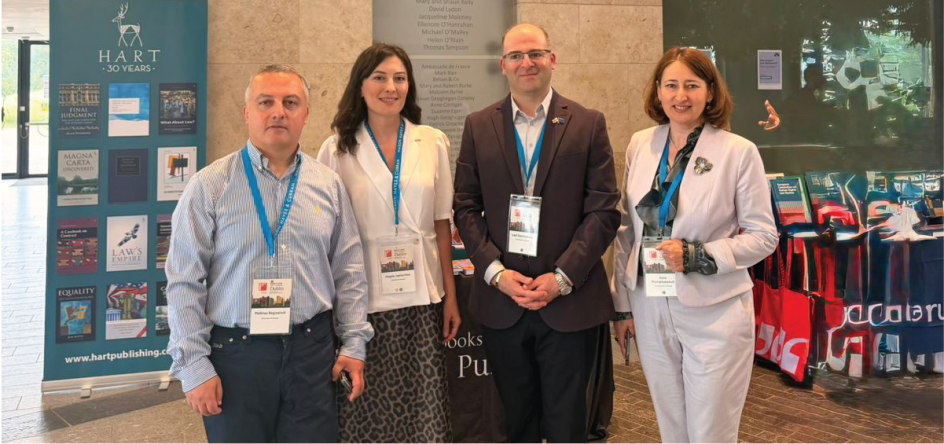
The annual gathering of the International Society of Public Law serves as a critical barometer for the current state of global legal scholarship. At the recent ICON·S 2026 academic conference held in Dublin, Ireland, the University of Georgia demonstrated its active and growing role in this international scholarly community. A dedicated academic team from the University of Georgia School of Law presented research on pressing public law issues, reinforcing the institution’s commitment to high-level legal research and global academic engagement. Schedule a free consultation to learn more about the academic programs and research opportunities available at the University of Georgia.
The Role of the International Society of Public Law in Modern Legal Academia
The International Society of Public Law (ICON·S) has established itself as the premier global network for scholars, practitioners, and students interested in public law. Unlike regional legal associations, ICON·S draws participants from diverse legal traditions, creating a unique environment for comparative legal analysis. An academic conference of this scale provides a structured venue where scholars can test their theories against peer scrutiny, identify emerging legal trends, and form cross-border research partnerships.
For legal academics, presenting at ICON·S requires navigating a rigorous peer-review process. The panels are designed to foster intense debate rather than mere presentation, challenging participants to defend their methodologies and conclusions. This environment ensures that the research showcased represents the cutting edge of public law, addressing real-world governance issues, constitutional frameworks, and human rights implementations. The focus on public law specifically allows for a deep examination of how state power is structured, limited, and exercised in modern democracies and transitioning political systems.
University of Georgia Representation at the Dublin Academic Conference
The delegation sent by the University of Georgia to ICON·S 2026 highlighted the depth of expertise housed within its School of Law. The team was led by Professors Ana Pirtskhalashvili and Malkhaz Begiashvili, accompanied by Associate Professor Irakli Samkharadze and PhD student Magda Japaridze. This composition of senior faculty alongside emerging doctoral researchers reflects a deliberate institutional strategy to foster multi-generational academic development.
Having faculty members present at major international conferences directly benefits the student body at the University of Georgia in Tbilisi. When professors engage with global peers, they bring back updated pedagogical perspectives, new case studies, and contemporary theoretical frameworks that enrich the classroom experience. Furthermore, the inclusion of a PhD student on the international stage illustrates the university’s dedication to providing its graduate researchers with platforms to build their academic profiles early in their careers.
Key Public Law Topics Presented by UG Scholars
The academic team from the University of Georgia did not limit their contributions to a single niche; instead, they addressed a wide spectrum of public law disciplines. Their presentations spanned constitutional rights, freedom of expression, environmental law, and children’s rights. This thematic variety demonstrates the broad competency of the School of Law and its relevance to contemporary legal challenges.
Constitutional Rights and Freedom of Expression
Freedom of expression remains one of the most heavily litigated and philosophically debated areas of constitutional law. In the context of Eastern Europe and the Caucasus region, this topic carries specific historical and political weight. The research presented by the UG scholars likely addressed the ongoing tension between protecting free speech and managing misinformation, hate speech, and digital regulation. As governments worldwide grapple with the regulatory challenges posed by social media and digital platforms, comparative public law scholarship provides essential frameworks for balancing individual liberties with public safety.
Advancements in Environmental Law
Environmental law has rapidly evolved from a specialized regulatory field into a central component of public law, largely driven by global climate change imperatives. Modern public law scholars are increasingly focused on climate litigation, the constitutional right to a healthy environment, and the legal mechanisms governments use to enforce environmental standards. By presenting on environmental law at ICON·S 2026, the University of Georgia faculty positioned their institution at the forefront of a legal discipline that will dominate judicial and legislative agendas for decades. This research is particularly relevant for countries experiencing the immediate impacts of environmental policy shifts.
Protecting Children’s Rights in Public Law
The inclusion of children’s rights in the UG delegation’s research portfolio highlights a critical area of public law that intersects with family law, constitutional law, and international human rights treaties. Scholars in this field examine how domestic legal systems incorporate international standards, such as the UN Convention on the Rights of the Child, into their jurisprudence. Analyzing how public law frameworks protect vulnerable populations like children provides insight into the overall health and humanitarian orientation of a state’s legal system.
Strategic Benefits of Global Conference Participation for Law Schools
When a law school consistently sends faculty to international forums like ICON·S, it yields strategic institutional advantages. Primarily, it elevates the university’s international profile. Academic reputation is built not only on local impact but also on how actively an institution’s scholars contribute to global discourse. The University of Georgia’s presence in Dublin signals to prospective students, visiting scholars, and international partners that it is a serious, research-oriented institution.
Additionally, these conferences facilitate the establishment of bilateral agreements, joint research projects, and faculty exchange programs. Networking at ICON·S allows the University of Georgia to benchmark its academic programs against global standards, ensuring that its curriculum remains competitive and relevant. Submit your application today to join a law school that actively prioritizes international academic integration and research excellence.
How Law Students Can Engage with International Academic Conferences
For current and prospective law students, understanding the importance of international academic conferences is vital for career planning. Participation in these events is not limited to established professors; students can leverage these gatherings in several ways to advance their professional development.
First, many major conferences, including ICON·S, feature dedicated poster sessions, workshops, or junior scholar networks specifically designed for PhD candidates and advanced master’s students. Engaging with these platforms allows students to receive feedback on their early research from international experts. Second, attending conferences—either in person or virtually—provides unparalleled access to the latest academic literature before it is published in journals. Students can use this exposure to identify gaps in current research, which can then inform their thesis or dissertation topics. Finally, the networking opportunities at these events can lead to internships, clerkships, or invitations to contribute to collaborative research papers. Explore our related articles for further reading on how to maximize your law school experience through research and networking.
The Trajectory of Public Law Scholarship in Georgia
The participation of the University of Georgia School of Law in ICON·S 2026 is a strong indicator of the maturation of legal academia in Georgia. As the country continues to navigate complex constitutional and democratic processes, the demand for rigorous, internationally informed public law scholarship has never been higher. The research presented by Professors Pirtskhalashvili, Begiashvili, Samkharadze, and PhD student Japaridze proves that Georgian legal scholars are not merely observing global trends, but actively contributing to them.
Moving forward, the continued integration of Georgian academics into networks like ICON·S will be crucial. It ensures that local legal challenges are analyzed with a comparative perspective, drawing on both European and global jurisprudence. For the University of Georgia, maintaining this momentum will require sustained support for faculty research, expanded funding for doctoral students, and a curriculum that consistently challenges students to think beyond domestic borders.
Have questions? Write to us! We welcome inquiries from prospective students and academics interested in the research initiatives at the University of Georgia School of Law. Share your experiences in the comments below regarding the importance of international academic conferences in the field of law.