
How the University of Georgia is Advancing History Teaching Approaches
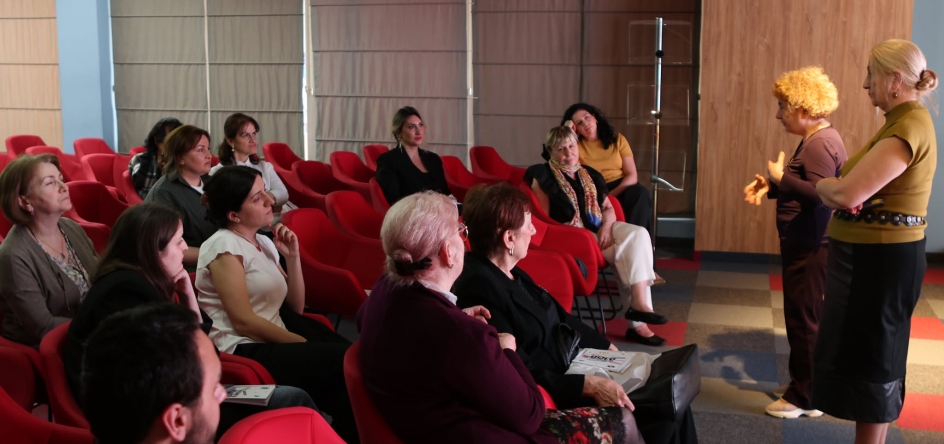
Traditional methods of teaching history, which often rely heavily on rote memorization of dates and names, are increasingly proving insufficient for developing the analytical skills students require today. Recognizing this shift, the University of Georgia recently hosted a dedicated workshop for educators titled “Modern Approaches and the Use of Digital Resources in Teaching History.” Held on May 15, this event brought together history teachers to examine current challenges, share innovative practices, and explore how integrating technology can streamline and improve the educational process. By focusing on practical applications rather than abstract theory, the University of Georgia continues to position itself as a focal point for academic advancement in the region.
The workshop was carefully structured to address the multifaceted nature of modern pedagogy. Moderated by Tsira Chikvaidze, the sessions guided participants through a comprehensive review of interactive teaching strategies and critical thinking-oriented methods. The objective was not simply to introduce new technology for the sake of novelty, but to demonstrate how specific digital tools and modern methodologies can directly enhance a student’s comprehension of complex historical narratives.
The Shift from Rote Memorization to Critical Thinking
A central theme discussed at the University of Georgia event was the transition from passive learning to active, critical engagement. Modern history teaching approaches prioritize document analysis, source evaluation, and contextual understanding. Teachers are increasingly acting as facilitators who guide students through primary sources, encouraging them to question biases, identify historical patterns, and construct evidence-based arguments. This method requires students to engage directly with the material, fostering a deeper, more durable understanding of historical events than traditional textbook reading provides.
Interactive Strategies for the Modern Classroom
Alongside critical thinking, interactive strategies form the backbone of contemporary pedagogy. Workshop participants explored how to implement structured debates, role-playing historical figures, and collaborative problem-solving exercises. These techniques force students to view historical events from multiple perspectives, making the subject matter more relevant and engaging. When students actively participate in reconstructing historical events, their retention of the material improves significantly, and they develop essential soft skills such as public speaking and teamwork.
Schedule a free consultation to learn more about how modern pedagogical strategies can be implemented in your specific educational context.
Integrating Digital Resources in Education for History Classes
The effective use of digital resources in education was the second major pillar of the University of Georgia workshop. The modern classroom is no longer confined to the physical space; it extends to digital archives, virtual museums, and interactive databases. For history teachers, the internet provides unprecedented access to primary sources that were once difficult or impossible to obtain. However, knowing how to curate and utilize these resources effectively is a distinct skill that requires targeted training and practice.
Practical Digital Tools for History Educators
During the sessions, educators examined various categories of digital tools. Geographic Information Systems (GIS) allow students to map historical borders, trade routes, and battle formations, adding a spatial dimension to their understanding. Digital archiving platforms enable students to handle high-resolution scans of original documents. Furthermore, interactive timeline software helps students visualize the sequence and overlap of global events. By integrating these tools, teachers in Georgia and beyond can create multimedia-rich lessons that cater to diverse learning styles, making abstract historical concepts tangible.
The Role of AI in Education for Historical Analysis
A particularly forward-looking segment of the workshop addressed the growing role of AI in education. Rather than viewing artificial intelligence as a threat to academic integrity, the presenters at the University of Georgia encouraged teachers to view it as a practical utility. AI tools can assist educators in quickly generating comprehensive rubrics, summarizing lengthy secondary source texts, and identifying patterns across large sets of historical data. For students, AI can serve as a preliminary research assistant, helping them to brainstorm research questions or understand the basic context of a time period before diving into rigorous academic research. The key emphasis was on using AI as a supplement to, rather than a replacement for, human critical analysis.
Explore our related articles for further reading on the practical applications of emerging technologies in academic settings.
Rethinking Assessment and Experience Sharing in Georgia
The final two topics covered in the workshop—experience sharing and assessment—are crucial for the long-term sustainability of any pedagogical shift. Implementing new history teaching approaches is only effective if educators have a support system to navigate the inevitable challenges. Furthermore, traditional multiple-choice tests are often inadequate for measuring the critical thinking and analytical skills that modern history courses aim to develop.
Collaborative Professional Development
The workshop highlighted the importance of professional networks. Special guests Manana Sanadze and Giuli Alasania shared their extensive professional experiences, providing real-world context to the theoretical frameworks discussed earlier in the day. They emphasized that educational reform does not happen in isolation. By participating in collaborative projects and research initiatives, teachers can share what works, troubleshoot what fails, and build a repository of best practices. Sanadze and Alasania specifically encouraged attendees to engage in future research projects, reinforcing the idea that teachers should also be active contributors to the academic field.
Evaluating Student Progress in a Digital Age
As teaching methods evolve, so must assessment strategies. The discussion at the University of Georgia focused on designing formative and summative assessments that align with interactive and digital learning. Instead of testing memorization, modern assessments might include digital portfolio projects, where students curate and annotate a collection of primary sources, or video presentations where students articulate historical arguments. These assessment models not only provide a more accurate measure of a student’s historical understanding but also prepare them for the types of digital communication they will encounter in higher education and the professional world.
Bridging Research and Classroom Practice
A highlight of the event was the presentation of the newly published book, “The History of Russian Occupation in Georgia,” authored by Manana Sanadze. This moment underscored the direct link between academic research and classroom instruction. Providing teachers with locally produced, rigorously researched texts gives them the materials necessary to apply the digital and critical thinking strategies discussed during the workshop. It serves as a practical example of how educators can move beyond standardized, generic textbooks to offer students nuanced, region-specific historical narratives.
Share your experiences in the comments below regarding the challenges and successes you have encountered when integrating new technology into your history curriculum.
Apply These History Teaching Approaches in Your Classroom
The insights shared at the University of Georgia workshop provide a clear roadmap for educators looking to modernize their classrooms. The transition requires deliberate planning and a willingness to experiment. Start by identifying one specific unit in your curriculum that relies heavily on lecture and textbook reading. Select a single digital resource—such as a digital archive or an interactive map—and build a lesson plan that requires students to actively extract information from that source.
Next, revise your assessment for that unit. If you currently use a standard short-answer test, consider replacing a portion of it with a document-based essay or a digital presentation. This allows students to practice the critical thinking skills you are actively teaching. Finally, seek out a community of practice. Connect with other history teachers in Georgia, whether through formal university partnerships or informal professional networks, to share your experiences and learn from the trials and errors of your peers.
The integration of digital resources in education and the adoption of modern history teaching approaches are not passing trends; they are necessary adjustments to a rapidly changing information landscape. By focusing on critical thinking, leveraging practical digital tools, understanding the utility of AI in education, and modernizing assessment methods, educators can provide students with a robust, engaging, and highly relevant historical education.
Submit your application today to join upcoming professional development workshops and academic programs designed to elevate your teaching career.